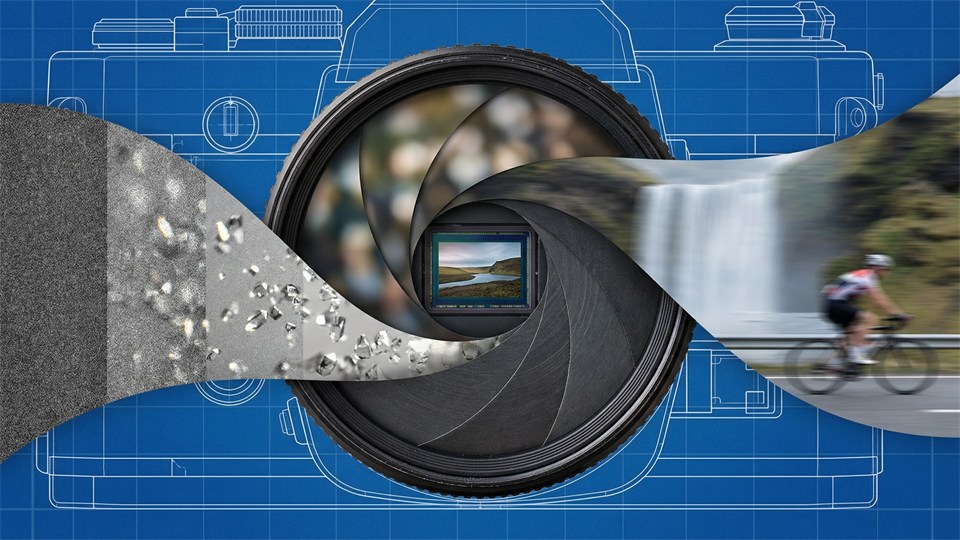


The camera's basic settings – ISO, aperture, and shutter speed – are the foundation of all photography. Whether you use a DSLR, a mirrorless camera, or an advanced compact camera, these three settings determine how your image will look. Understanding them is the key to gaining control over exposure, creating moods, and taking exactly the pictures you want. In this article, we explain what ISO, aperture, and shutter speed mean, how they affect your images, and how you can use them creatively.
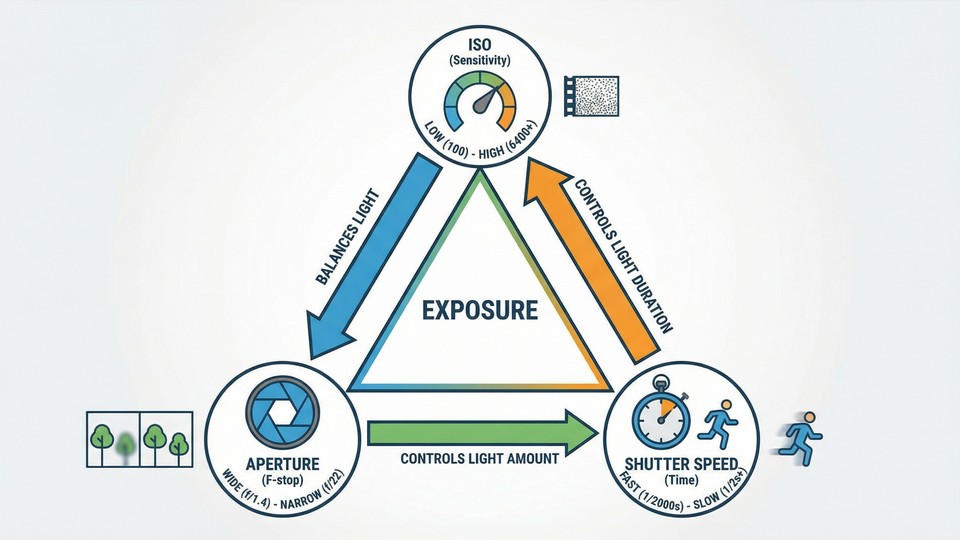
ISO, aperture, and shutter speed are collectively called the exposure triangle. The three settings work together to determine how much light hits the camera's sensor – and thus how bright or dark your image will be. Let's take a closer look at what each of the three elements does.
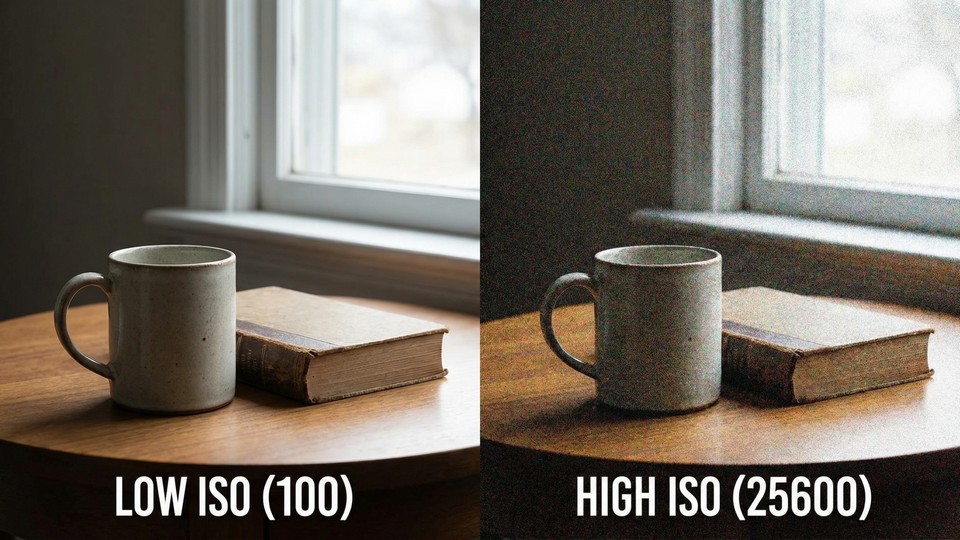
ISO indicates how sensitive the camera's sensor is to light. Low ISO (e.g., ISO 100) means low sensitivity, so the sensor requires more light to create a correctly exposed image. High ISO (e.g., ISO 3200) means high sensitivity and makes it possible to take pictures in darker environments, but can also increase image noise.
Note that the higher the ISO value you use, the more likely your image will have visible noise – small colored grains that can make the image less clear.
The aperture is the opening in the camera's lens that lets light pass through to the sensor. The aperture is measured in so-called f-numbers (e.g., f/1.8, f/4, f/16). The lower the f-number, the larger the opening, and the more light is let in. The higher the f-number, the less light is let in. The aperture thus controls both how bright the image becomes and how deeply focused it appears.
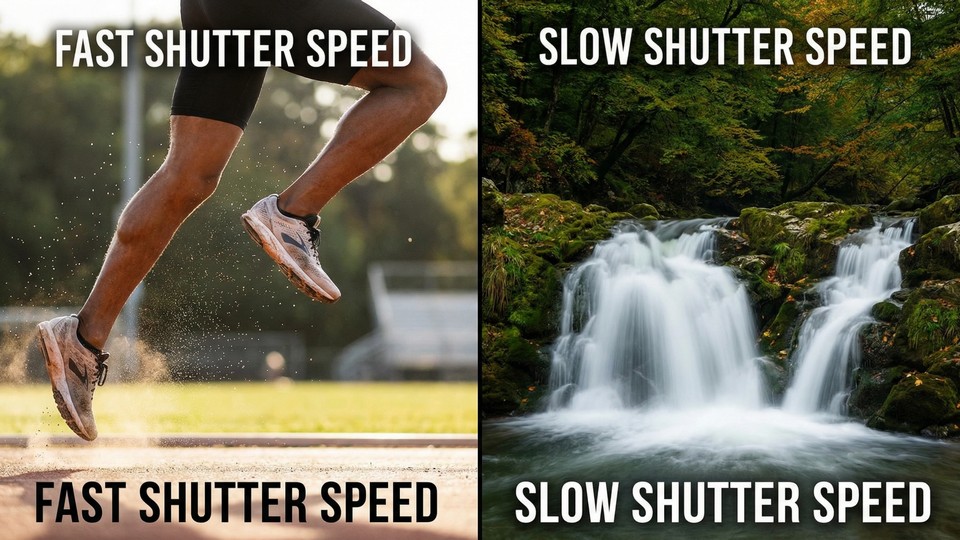
Shutter speed (also called exposure time) determines how long the camera's sensor is exposed to light. Shutter speed is measured in seconds or fractions of a second (e.g., 1/1000s, 1/60s, 2s).
It is important to remember that the longer the shutter speed, the greater the risk of blurry images, especially if you are holding the camera by hand. Use a tripod for very long shutter speeds.
To get a correctly exposed (neither too dark nor too bright) image, you need to balance all three settings. If you change one, you often have to adjust one of the others to compensate:
It's about finding the right balance, depending on what expression or mood you want in the image.
When you understand and master ISO, aperture, and shutter speed, a world of creative possibilities opens up. Here are some examples of how you can use the settings deliberately:
Most cameras have automatic modes where the camera chooses the settings itself. But if you want maximum control and to express yourself creatively, it's worth learning the manual settings. Try, for example, aperture priority (A or Av), where you choose the aperture and the camera adjusts shutter speed and/or ISO. Or shutter priority (S or Tv), where you control the shutter speed. In full manual mode (M), you control everything yourself.
ISO, aperture, and shutter speed are the camera's most important tools. When you understand how they are connected, you can take better pictures in all conditions – and use them creatively so your images get exactly the mood and expression you want. Start by experimenting and learn from your results – then you'll quickly master the basic settings.