
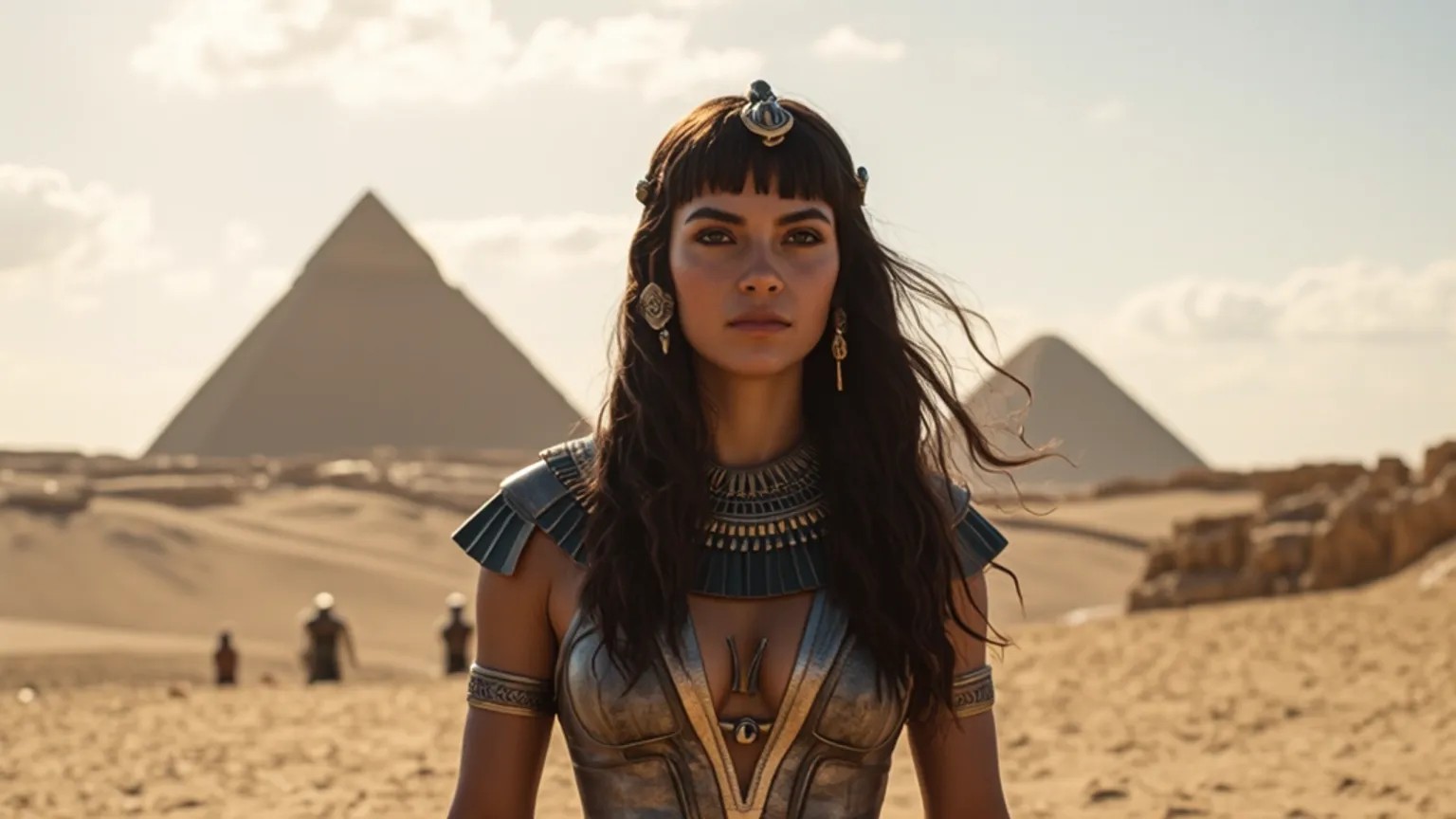


Cleopatra VII Philopator is one of world history's most legendary and mythical figures. As the last ruler of ancient Egypt, she has fascinated historians, writers, artists, and filmmakers for centuries. Cleopatra was born into the powerful Ptolemaic dynasty and ruled an Egypt in transition, where Roman influence was growing. Her life was marked by political acumen, dramatic alliances, and fateful love affairs that have made her a cultural icon, not only in antiquity but also in the present day. But who was Cleopatra really, and why is her name still so powerful?
Cleopatra was born around 69 BC in Alexandria, which at that time was one of the world's largest and most cosmopolitan cities. She belonged to the Ptolemaic family, a Greek-Macedonian royal family that had ruled Egypt since the death of Alexander the Great. The Ptolemies held on to their Greek roots, but Cleopatra was the first in her family to learn the ancient Egyptian language and take part in the country's religious traditions. This helped make her popular among the Egyptians and gave her a unique position as a bridge-builder between two cultures.
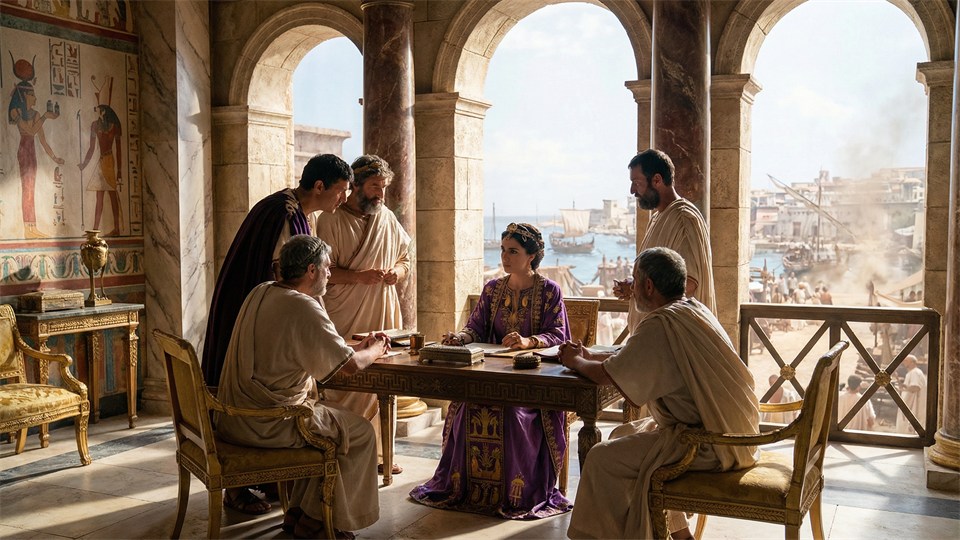
As a princess, Cleopatra received an extensive education. She studied languages, philosophy, mathematics, rhetoric, and strategic thinking. She spoke several languages fluently—some sources mention up to nine—and was taught the art of diplomacy. Already as a teenager, she was involved in the court's political intrigues and learned how power games worked in practice.
After her father's death in 51 BC, Cleopatra took the throne together with her brother, Ptolemy XIII, whom she was also formally supposed to marry according to the traditions of the time. The power-sharing between siblings quickly developed into a complicated conflict. Cleopatra was exiled from Alexandria but returned with support from loyal followers. She showed early on a great willingness to fight for her position, and her ability to form alliances became crucial for her survival.
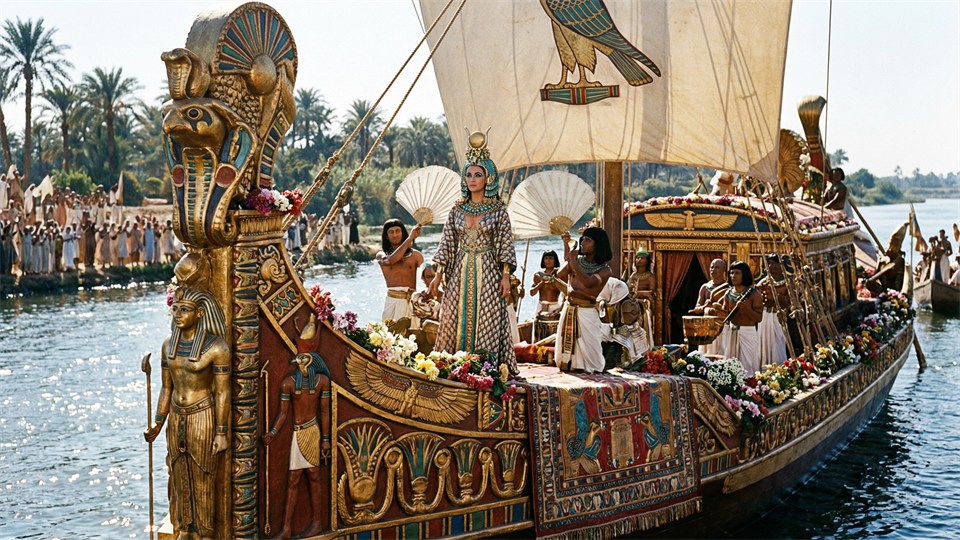
A decisive turning point came when the Roman general Julius Caesar arrived in Egypt in 48 BC. Cleopatra understood the importance of allying herself with the powerful Roman, and according to legend, she had herself smuggled into Caesar's palace rolled up in a carpet. This became the beginning of a political and romantic partnership that strengthened her power and secured her the throne. Together with Caesar, Cleopatra had a son, Caesarion, whom she hoped could secure the dynasty's survival.
After Caesar's death, Cleopatra's fate became intertwined with yet another of the Roman Empire's great figures—Mark Antony. Their relationship was both romantic and strategic. Together they had three children, and Cleopatra used their alliance to try to rebuild Egypt's position in the Mediterranean region. Their lavish feasts and ceremonies became famous, and Cleopatra was often portrayed in Roman propaganda as a seductive and manipulative queen. For her, however, it was about securing her country and dynasty against Roman dominance.
Cleopatra's relationship with Mark Antony put her in direct conflict with Octavian—the later Emperor Augustus. The Romans portrayed her as a threat to their republic and as the cause of Mark Antony's downfall. This propaganda has shaped later perceptions of her, where she is often depicted as a dangerous seductress rather than an intelligent and capable leader.
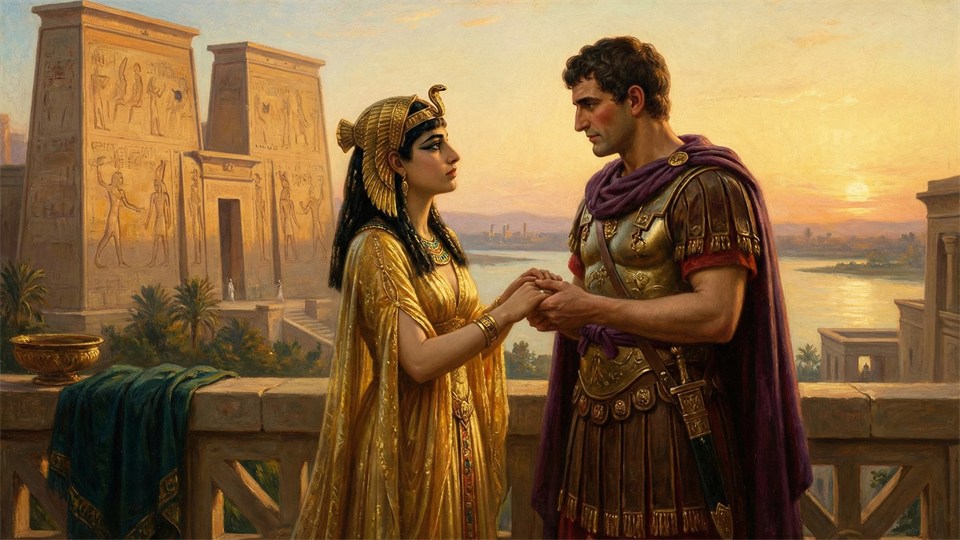
In 31 BC, Cleopatra and Mark Antony faced Octavian in the decisive Battle of Actium. The battle ended in disaster for Cleopatra and her allies, and she had to flee back to Egypt. Shortly after, Mark Antony committed suicide, mistakenly believing that Cleopatra was dead. Cleopatra tried once more to negotiate with Octavian but quickly realized that her power was spent.
Cleopatra's death is surrounded by myths. According to tradition, she took her own life by letting herself be bitten by a venomous snake—a cobra, which symbolized the Egyptian goddess Wadjet. Historians still debate whether she died from poison or if another method of suicide was involved. Her death marked not only the end of her own life but also the end of ancient Egypt's era of greatness. Egypt now became a Roman province.
Cleopatra has over time inspired countless works of art, plays, films, and novels. Shakespeare wrote the tragedy "Antony and Cleopatra," and in the 20th century, she was immortalized in Hollywood with Elizabeth Taylor in the lead role. Her image has often been shaped by contemporary ideas about femininity, power, and seduction, and she has been both demonized and idealized. Artists have depicted her as everything from a luxurious queen to a tragic heroine.
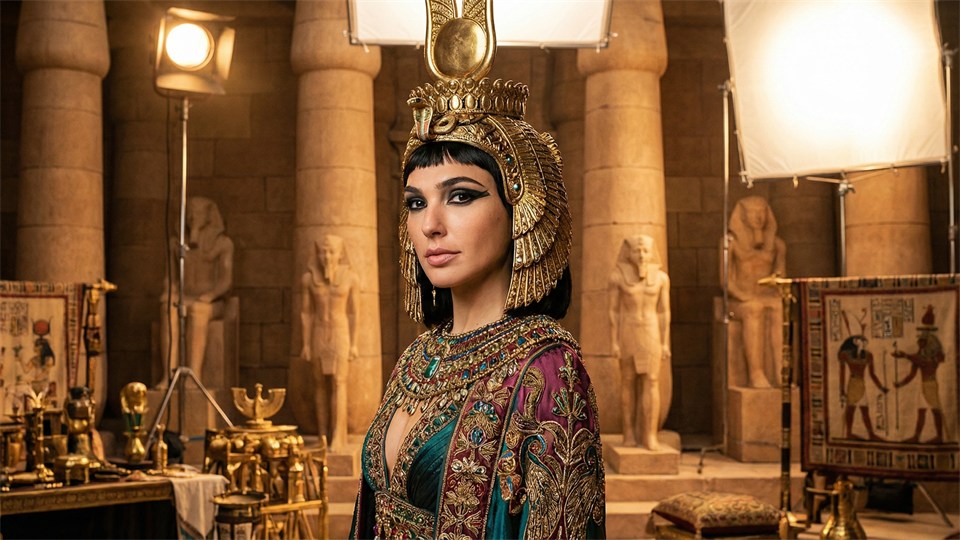
Today, Cleopatra is a symbol of female power, charisma, and strategic thinking. Her story is used as an example of how women, even in male-dominated societies, can play a decisive role in history. She has gained status as a feminist icon, but also as a warning about the transience of power.
Cleopatra's life marks the transition from ancient Egypt to the Roman era. Her efforts to preserve her country and dynasty testify to great political acumen and courage. Although her attempts to restore Egypt's greatness failed, her name lives on as a symbol of resilience and ambition. Her influence on art, literature, and popular culture underscores how strong an impact one person can have on world history.
Cleopatra was more than just a seductress or a tragic queen. She was a skilled politician, diplomat, and strategist who managed to navigate a time of great upheaval. Her life and death have inspired generations, and her story reminds us that power, charisma, and intelligence can change both the present and the future. Cleopatra's legacy lives on as an eternal symbol of the fascination with human history and its many facets.