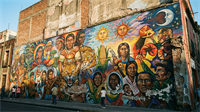
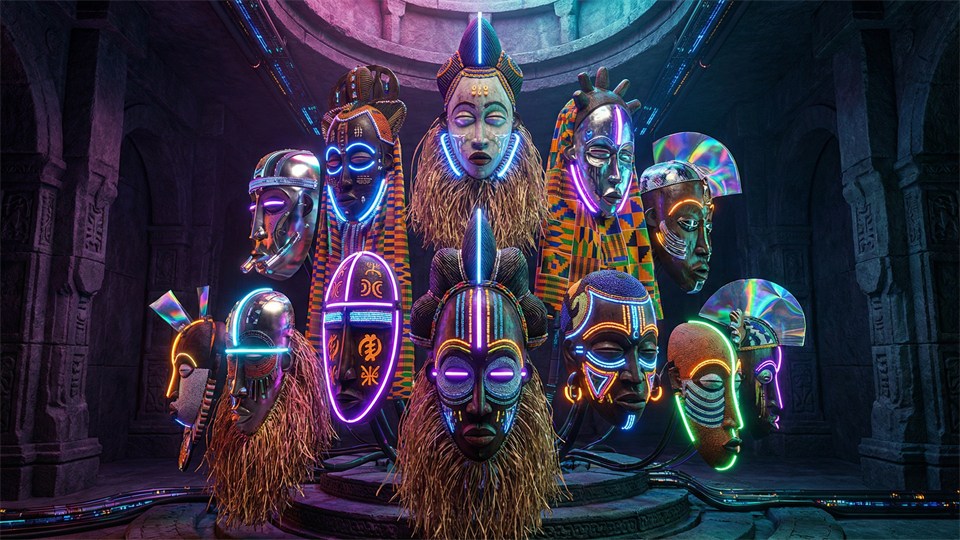


Afrofuturism is a cultural movement that combines elements from African culture, history, and mythology with science fiction, technology, and visions of the future. The concept was first formulated in the 1990s, but draws on older traditions and practices. In visual art, Afrofuturism expresses itself by blending traditional African symbols, colors, and forms with futuristic and speculative motifs. The movement challenges Western narratives of past and future by placing Black people and African culture at the center of the future. Afrofuturism is not just an aesthetic, but also a way to reinterpret history and create new possibilities for identity and belonging.
One of the most distinctive features of Afrofuturist art is its play with time and space. Artists combine elements from prehistoric Africa with futuristic cityscapes, spaceships, and technological objects. This creates images where the past is not just a backdrop, but actively shapes the future. For example, you can see works where pharaonic motifs merge with cybernetic implants, or where traditional textile patterns are used as surfaces on spacecraft. This blending challenges the idea that Black culture only belongs to the past, and opens up the possibility that African voices also have a place in the stories of the future.
Technology plays a central role in Afrofuturist art. But unlike Western science fiction, where technology is often disconnected from culture, Afrofuturist artists integrate technology with African identities and traditions. Artists like Wangechi Mutu and Cyrus Kabiru create hybrid figures where bodies and technology merge. These works can be both critical and visionary: They comment on the legacy of colonialism, but at the same time point to the possibilities for technological empowerment and cultural renewal.
Afrofuturism in art is also about reclaiming control over narratives and images. Many artists use Afrofuturist expressions to challenge stereotypical or negative portrayals of Black people. By placing people of African descent in powerful, innovative, or mythical roles, they reshape cultural identities and offer new role models. This is visible in portraits where Black women are depicted as galaxy-traveling queens or in installations where Black bodies become symbols of strength and resilience.
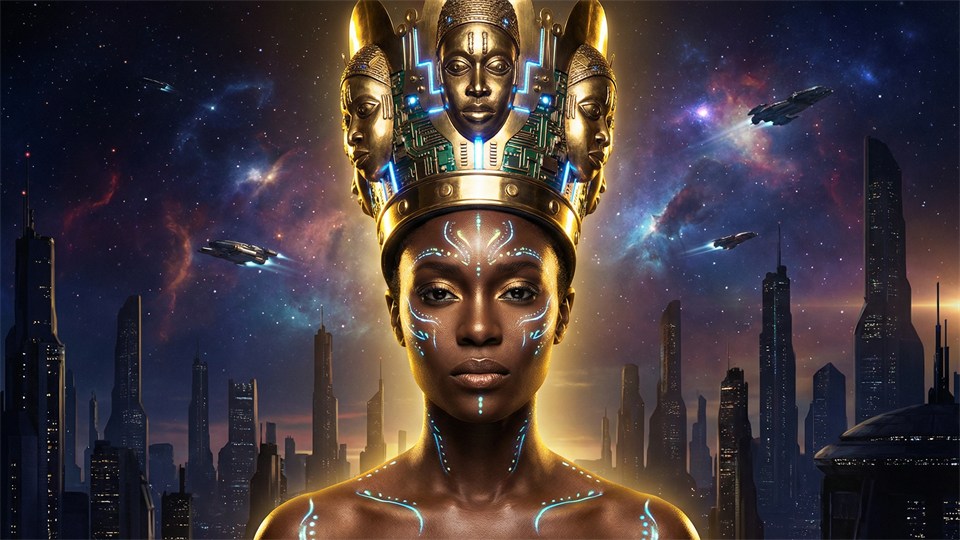
Wangechi Mutu, born in Kenya and based in the USA, is one of the most influential Afrofuturist artists. Her collages and sculptures combine African aesthetics with science fiction and surrealist elements. Mutu's works especially explore femininity, the body, and transformation, often through hybrid figures that balance between the human, the technological, and the mythical. Her installations have been exhibited at major museums worldwide and have helped define the visual language of Afrofuturism.
British-Nigerian Yinka Shonibare works with sculpture, installation, and photography. He is especially known for using colorful African textiles to dress mannequins and historical figures, often in absurd or surprising situations. Shonibare's works examine colonialism, identity, and power relations, and his use of textiles connects the craftsmanship of the past with the staging of the future. He has created works featuring everything from cyborgs to space travelers, and his style is a clear example of Afrofuturist aesthetics.
Cyrus Kabiru from Kenya is known for his "C-Stunners" – sculptural glasses made from recycled materials. Kabiru's glasses place the wearer in the role of a future seer, where the view is changed and expanded. His works address both sustainability and visions of the future, and show how technology and ingenuity can arise out of scarcity and creativity. Kabiru has become an icon of African innovation in art and design.
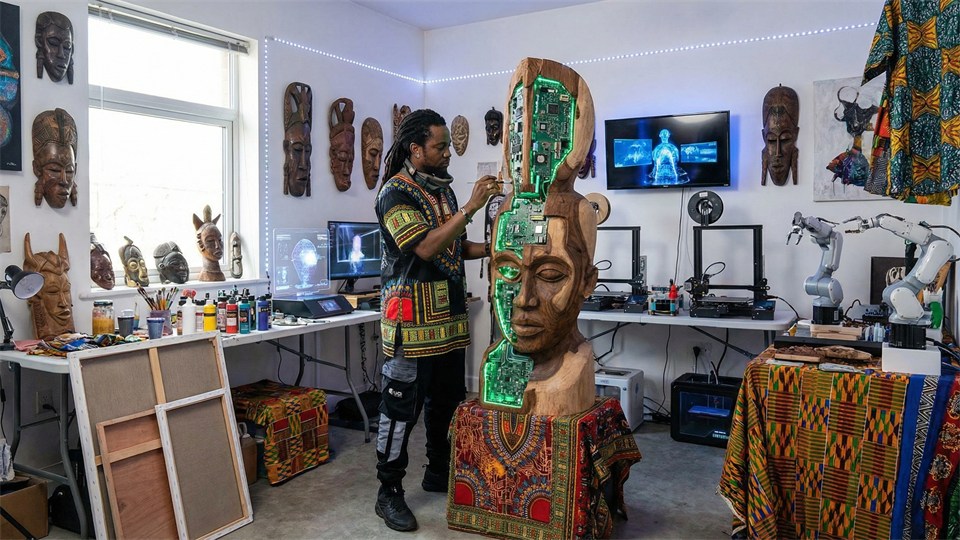
Selam Bekele, an Ethiopian digital artist, works with 3D animations and digital illustrations, where she stages Afrofuturist worlds. Bekele's works blend Ethiopian myths and patterns with futuristic cities and robots, providing a unique perspective on how future and tradition can coexist. Her work points to how digital media enable new forms of African self-representation and storytelling.
Painting and collage have been important media for Afrofuturist artists. Through the blending of colors, shapes, and textures, artists can create complex universes where past and future merge. The collage technique is often used to juxtapose images of Black bodies with spaceships, planets, animal motifs, and machine parts. This can be seen, for example, in Wangechi Mutu's work, where human figures are transformed into something both familiar and alien.
Sculpture and installation make it possible to create physical spaces where the audience can experience Afrofuturist worlds firsthand. Yinka Shonibare and Cyrus Kabiru often work with large installations, where the viewer is invited to step into new, alternative futures. The installations often combine recycled materials, textiles, and technology and challenge the boundaries between art, design, and everyday objects.
The digital development has opened up entirely new possibilities for Afrofuturist art. Artists like Selam Bekele use 3D modeling, virtual reality, and digital illustrations to create interactive and changeable universes. Digital media make it possible to spread Afrofuturist aesthetics globally and create networks between artists across the continent and diaspora. Here, Afrofuturism becomes both an art form and a digital movement.
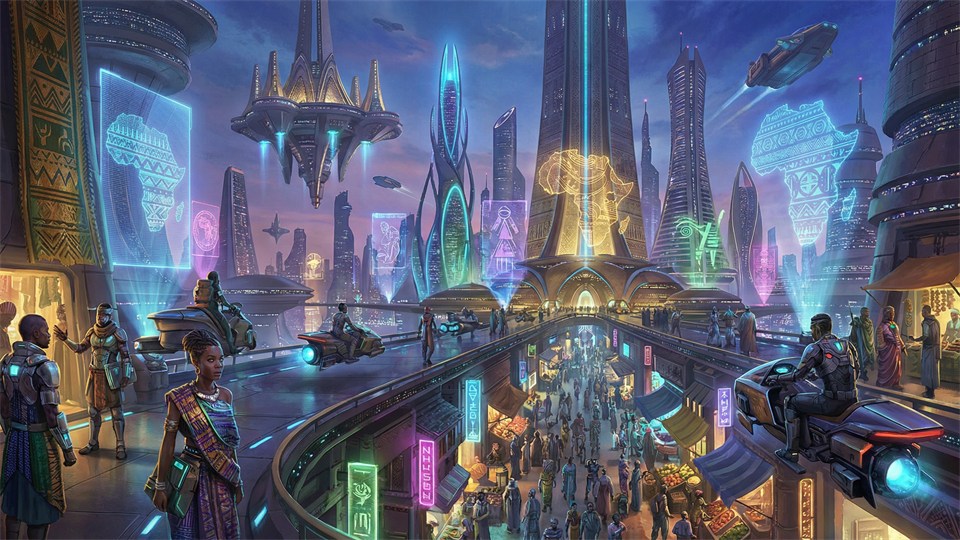
Afrofuturism has grown out of both African and diasporic environments, especially in North America and Europe. Artists from Nigeria, Kenya, South Africa, the United Kingdom, and the USA have all contributed to the global movement. Today, Afrofuturist art can be seen in museums, festivals, and in the streets all over the world. International exhibitions and collaborations have made Afrofuturism an important part of contemporary art, and have strengthened connections between Black artists across the continent and diaspora.
Afrofuturism has not only influenced the art world, but also popular culture. Major films like "Black Panther" have introduced Afrofuturist aesthetics to a broad audience and inspired new generations of artists. Musicians like Sun Ra and Janelle Monáe have also drawn on Afrofuturist themes in their visual universes, creating synergy between music, film, and visual art.
Afrofuturism gives Black artists and communities the opportunity to imagine a future where they are not limited by colonial or racist narratives. Visual art opens up new ways of thinking about identity, technology, and society. This makes Afrofuturism a dynamic and continually relevant movement that not only reinterprets the past, but actively shapes the culture and art of the future.
Afrofuturism in visual art is much more than an aesthetic direction; it is a powerful movement that brings together past, present, and future in a vibrant, global expression. Through innovative artists, creative themes, and diverse media, Afrofuturism has created new spaces for storytelling, empowerment, and cultural renewal. The movement has not only changed the way we view Black identities and histories, but has also inspired a broader understanding of what art and the future can be. Afrofuturism will continue to leave its mark on visual art, both in Africa, the diaspora, and the rest of the world.