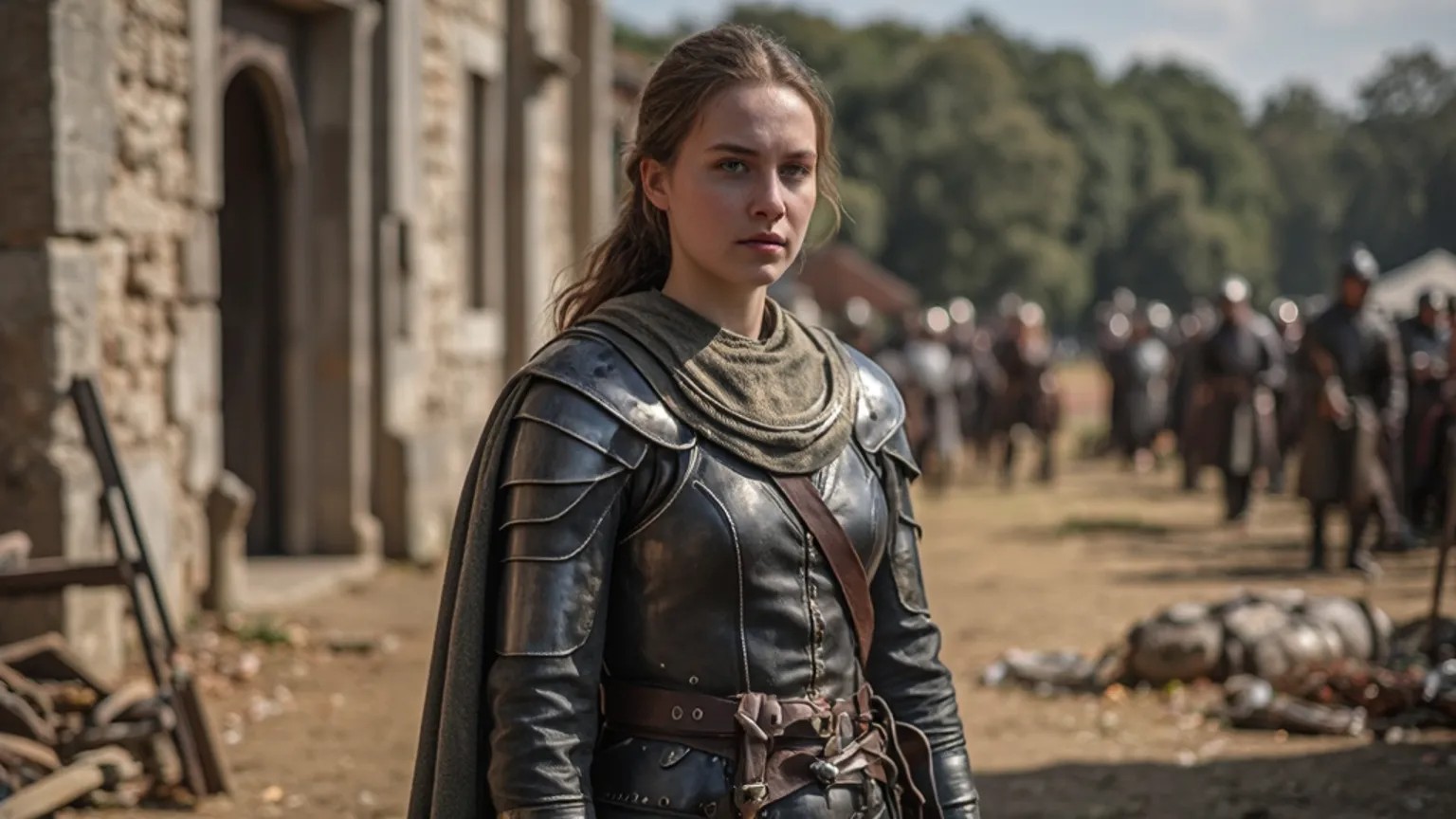


Joan of Arc, also known as the Maid of Orléans, is one of the most iconic and fascinating figures in world history. Her life unfolded in France at the beginning of the 15th century, in the midst of the brutal Hundred Years' War between England and France. Despite being a young peasant girl with no military experience, she became a central figure in France's struggle for freedom and independence. Joan of Arc has been celebrated as a national saint, an inspiration for art and literature, and as a symbol of courage, faith, and the will to fight for what one believes in.
Joan of Arc was born around 1412 in the village of Domrémy in northeastern France. Her family were peasants, and she grew up in modest circumstances. Her parents taught her to work on the farm, and Joan received a traditional upbringing focused on Catholic faith and daily toil. From an early age, Joan was known as a devout and unusually serious girl who often prayed and went to church.
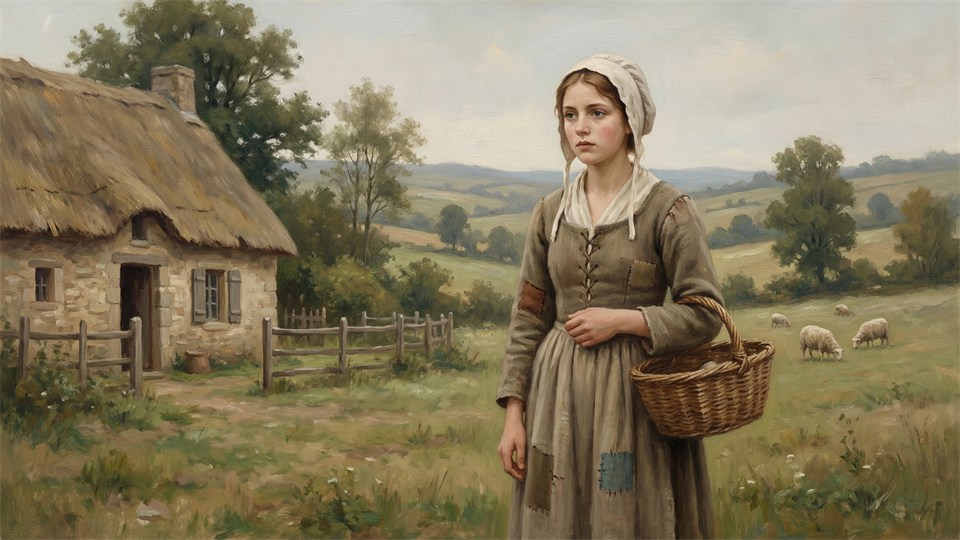
Joan later said that from the age of about 13, she began to hear voices and see visions. According to her, it was saints such as Saint Michael, Saint Margaret, and Saint Catherine who urged her to save France from the English and lead the crown prince, the future Charles VII, to the throne. In France at the time, where faith played a major role, such visions were both admired and feared, and Joan's stories would later have great significance for her fate.
The Hundred Years' War (1337-1453) was a long and bloody conflict between England and France over the right to the French throne. When Joan was growing up, large parts of France were occupied by the English and their allies, and the country was marked by hardship, fear, and uncertainty. Many French people had lost hope of regaining their land, and the crown prince, Charles, was exiled from the capital and without real power.
Joan was convinced that she had a divine calling to help France. In 1428, she traveled to the nearby town of Vaucouleurs to seek help to meet the crown prince. After several attempts, she finally managed to convince the local commander that she should be sent to Charles. Joan's faith in her mission and her persuasive personality made an impression, even on skeptical soldiers and officials.
When Joan met the crown prince in 1429, he was quickly convinced that she was something special. She was sent to Orléans, which was besieged by the English, and there she was allowed to lead the troops. Although she had no military experience, she became a rallying point for the soldiers, who were inspired by her courage and faith. Joan's ability to motivate and her presence on the battlefield gave new hope to an army that had been marked by defeat.
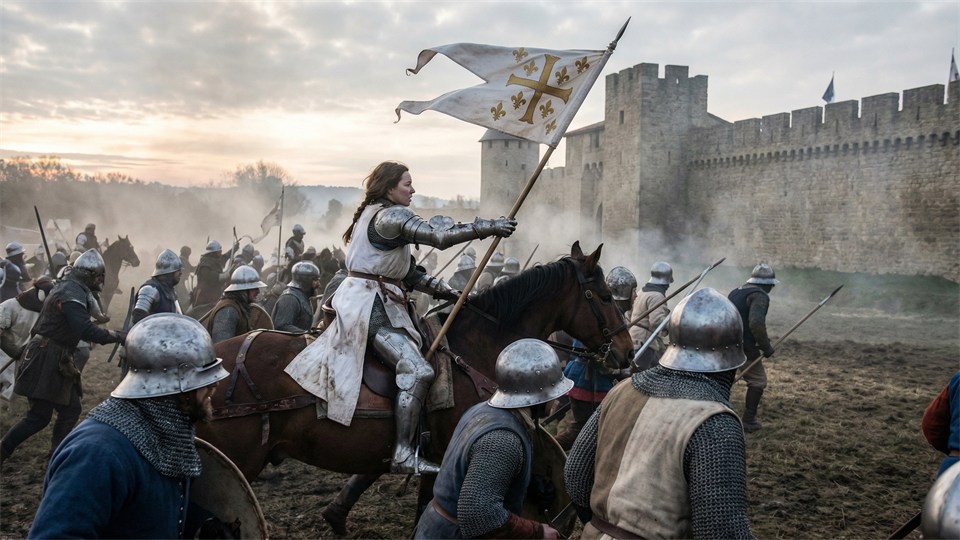
Joan's greatest victory was the liberation of Orléans in May 1429. The city had been besieged for months, and the prospect of victory was slim. Joan took an active part in the fighting, carried the banner, and encouraged the soldiers to keep fighting. Her presence was seen as a sign of God's support, and only a few days after her arrival, the English were forced to abandon the siege. The liberation was a turning point in the war and made Joan a national hero.
After the victory at Orléans, Joan believed that her next task was to lead the crown prince to Reims, where French kings were traditionally crowned. Despite great resistance and dangers, she succeeded in leading Charles and his army through hostile territory. On July 17, 1429, Charles was crowned King of France in Reims Cathedral with Joan by his side. This event strengthened both the king's position and Joan's reputation as the savior of France.
After the coronation, Joan continued to fight for France, but her luck turned in 1430. During an attempt to liberate the city of Compiègne, she was captured by the Burgundians, who were allied with the English. She was handed over to the English, who saw her as a threat and wanted to neutralize her both politically and religiously.
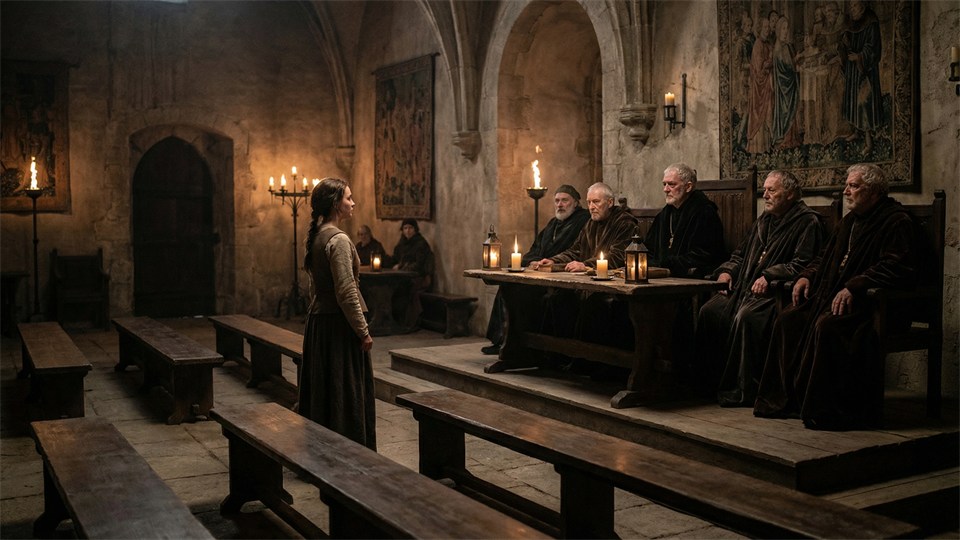
Joan was put on trial in Rouen, accused of heresy, witchcraft, and of dressing as a man (she wore soldiers' clothing, which was unusual for women at the time). The trial was deeply unfair; the judges were biased, and Joan had no real opportunity to defend herself. She was interrogated repeatedly and tried to hold on to her faith and her visions, even though she was subjected to pressure and threats.
On May 30, 1431, Joan was sentenced to death and burned at the stake in the square in Rouen. She was only 19 years old. According to tradition, her last words were a cry for Jesus. Joan's death quickly became a symbol of innocence and martyrdom, and many French people saw her as a victim of political injustice.
Joan's reputation grew after her death. In 1456, only 25 years later, her trial was reopened, and she was acquitted of heresy. In 1920, she was canonized as a saint by the Catholic Church. Today, Joan of Arc is regarded as one of France's most important saints and national symbols. Countless statues and monuments have been erected in her honor, both in France and in the rest of the world.
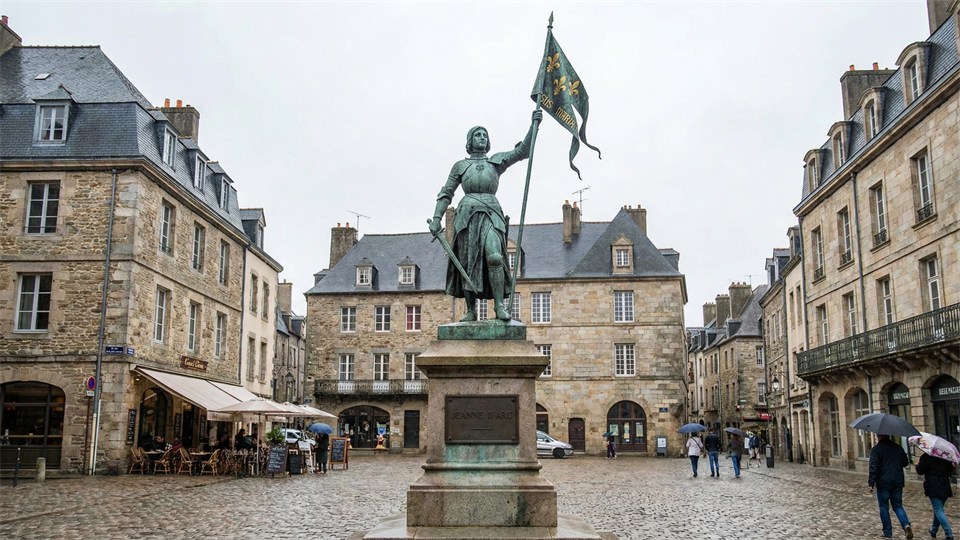
Joan of Arc has inspired artists, writers, and filmmakers for centuries. Her life has been depicted in paintings, sculptures, operas, plays, and films. Among the most famous works about Joan of Arc are Carl Th. Dreyer's silent film "La Passion de Jeanne d’Arc" and George Bernard Shaw's play "Saint Joan." She has also been used as a symbol in political and social contexts, both as a role model for women's rights and as a national icon.
Joan's story is still told and celebrated, especially in France, where she has her own national holiday on May 8. She is seen as a symbol of courage, faith, and justice – a person who dared to go against the tide and fight for what she believed was right. Joan's legacy lives on in today's pop culture, and she is often used as an example that individuals can change history.
Joan of Arc is one of the most remarkable women in world history. Her life shows how faith, will, and courage can lead to great achievements – and how myths and legends can grow around real people. From peasant girl to national hero, from heretic to saint, she has left an indelible mark on France's history, art, and culture. Her story reminds us that individuals can make a difference, even under the most difficult circumstances.