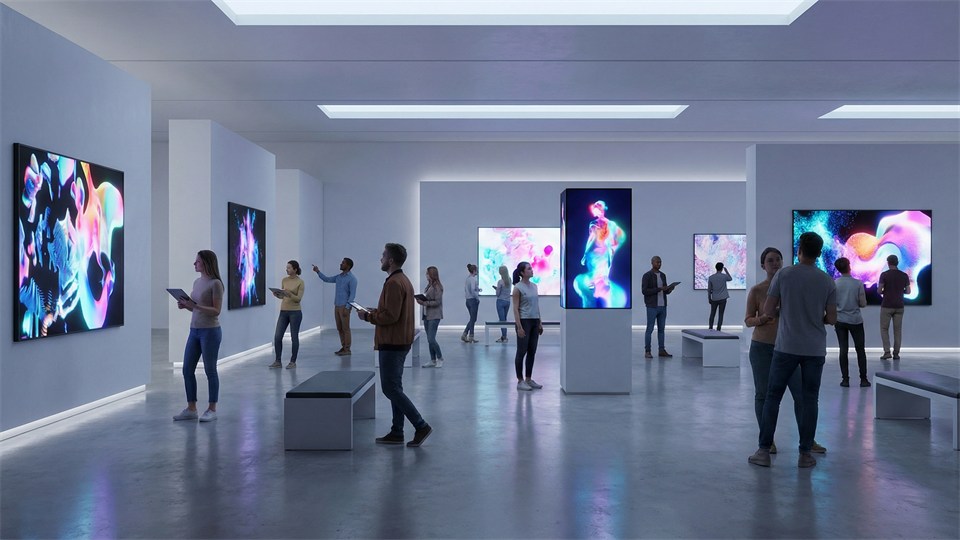


In recent years, digital art and NFTs (Non-Fungible Tokens) have truly taken the international art scene by storm. Digital art refers to artworks that are created, processed, or presented digitally – that is, on computers, tablets, or other digital devices. This can include everything from digital paintings, animations, and 3D sculptures to advanced interactive installations. NFTs are a technology that makes it possible to buy, own, and sell digital artworks in a way where ownership can be proven and cannot be copied. This has created a revolution in the way we perceive, collect, and trade art.
NFT stands for Non-Fungible Token, which means a unique, non-interchangeable proof of ownership that exists on a blockchain. A blockchain is a digital database that acts as a kind of public and immutable "logbook" of ownership and transactions. When an artist creates a digital work and mints it as an NFT, this work receives a unique code that proves who owns it. Unlike cryptocurrencies like bitcoin, where each coin is identical, each NFT is unique. This means that if you buy an NFT, you have the only proof of ownership of that specific digital work, even though others can copy or download the image.
NFT technology has made it possible for artists to sell their digital works directly to collectors, bypassing galleries. At the same time, they can program royalties into the NFT, so they automatically receive a percentage every time the work is resold. For collectors, this means they can invest in and own unique digital works, where ownership is secure and easy to prove.
Many artists have achieved great fame through NFTs and digital art. Some of these were already recognized in digital circles, while others have had their breakthrough because of the NFT wave. Here are some of the most prominent names and their significance for the modern art world:
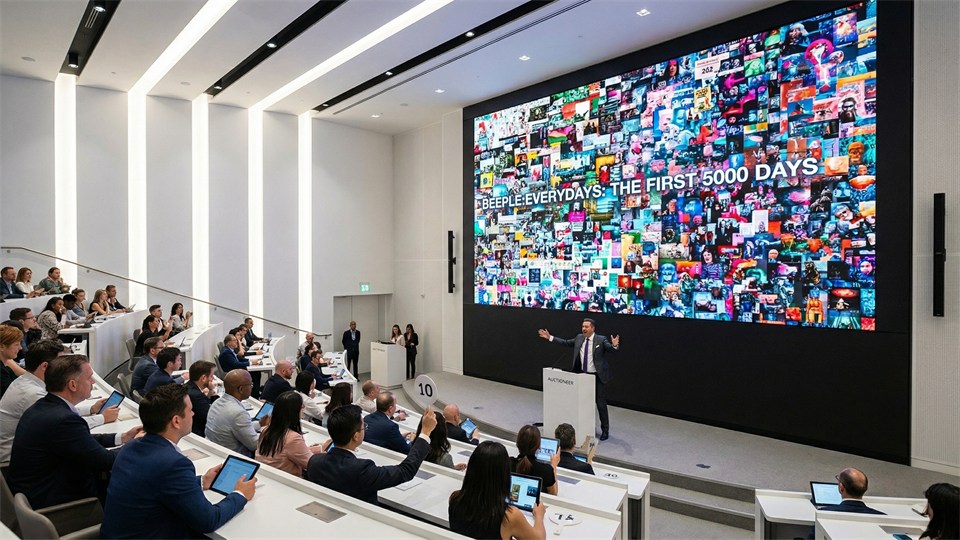
American Mike Winkelmann, better known as Beeple, became world-famous when his digital collage "Everydays: The First 5000 Days" was sold as an NFT for about 69 million dollars in 2021. Beeple has since become a symbol of the digital art movement and has inspired thousands of artists to experiment with NFTs. His style is colorful, satirical, and often political, and he works with both still images and animated works.
Paksi, an anonymous artist from Turkey, has achieved international recognition for their generative, algorithmically created artworks. Paksi works with code that generates unique visual patterns and shapes, which are often sold as NFTs via platforms like Art Blocks. Paksi’s works challenge our understanding of what art can be and highlight the interplay between human and machine.
The London-based artist XCOPY is known for his highly graphic and often dark style, combining animation, pixel art, and glitch effects. XCOPY’s NFT works have achieved high prices and great popularity, especially among young collectors in the crypto market. His works often thematize mortality, technology, and social criticism.
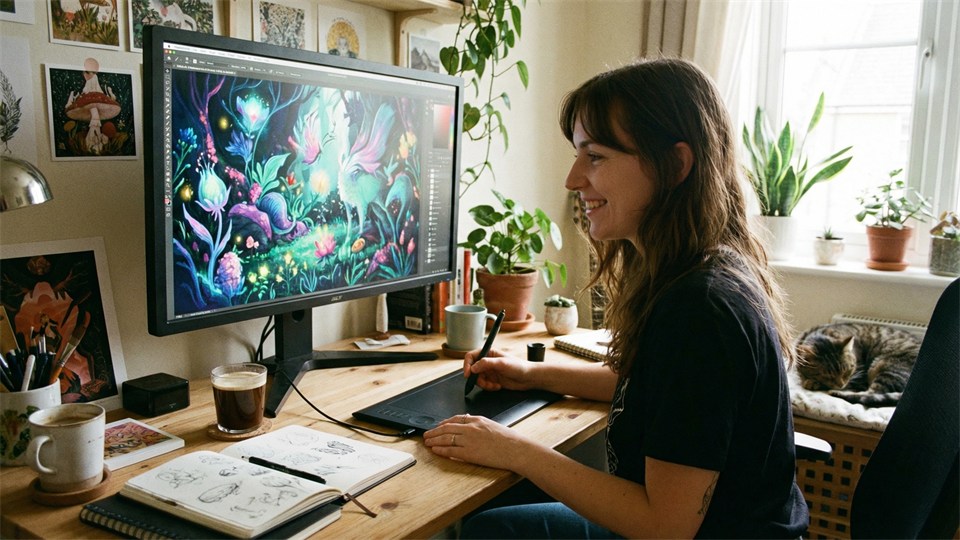
Becoming a digital artist today does not necessarily require access to expensive materials or galleries. Anyone with a computer and creativity can create digital art and exhibit it to a global audience. However, it still requires talent, originality, and an understanding of digital tools.
Most digital artists work with programs such as Adobe Photoshop, Procreate, Blender (for 3D), or specialized apps for animation and graphics. When the work is finished, it can be uploaded to NFT platforms like OpenSea, Rarible, or SuperRare, where it can be sold as an NFT. Here, everyone has the opportunity to present their works, but it takes attention to be discovered among the crowd.
A large part of success as a digital artist in the NFT world is about actively participating in online communities, for example on Twitter, Discord, and Instagram. Here, inspiration is exchanged, collaborations on projects take place, and artists help each other navigate the new digital art world. Many artists have built large followings through social media, which can lead to greater sales and collaboration opportunities.
Although NFTs and digital art have opened new opportunities, there are also challenges and points of criticism. One of the biggest criticisms has been the environmental impact. Many NFT platforms use blockchain technologies that require a lot of energy, especially if they are based on the Ethereum network. This has led to debate about sustainability and responsibility in the art world.
Another issue is copyright and copying. Although NFTs secure ownership of the digital work, the image itself can still be copied and shared online. This has led to discussions about what you actually own when you buy an NFT, and how artists can best protect their work. New solutions and standards are continuously being developed to secure the rights of both artists and buyers.
Digital art and NFTs are still a young field, and development is moving quickly. More and more museums and galleries are beginning to take an interest in digital works, and major auction houses have included NFTs in their programs. At the same time, the technologies are being developed to become more environmentally friendly and user-friendly. Virtual reality and augmented reality also open new possibilities for how we experience and interact with digital art.
One of the most significant consequences of NFTs and digital art is that the art market has become more democratic. Artists all over the world can now reach a global audience without going through traditional galleries or intermediaries. This means that new voices and perspectives are given space, and collectors have access to a much wider selection of works than before.
Digital art and NFTs have revolutionized both how we create and experience art. New international stars like Beeple, Paksi, and XCOPY show how much potential there is in the digital. At the same time, the technology challenges our understanding of ownership, value, and copyright. While there are still challenges to solve, everything points to digital art and NFTs playing an ever greater role on the global art scene in the future. For both artists and collectors, the possibilities have never been greater – and only the imagination sets the limits.