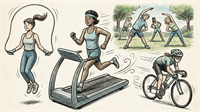



HIIT training has in recent years gained great popularity among both beginners and experienced exercisers. HIIT stands for "High-Intensity Interval Training" – in English: high-intensity interval training. It is a form of exercise that combines short, intense periods of physical activity with short breaks or periods of lower intensity. In a relatively short time, you can achieve significant training results. But how does HIIT actually work, who can do it, and what are the advantages and disadvantages? In this guide, you’ll get the answers.

HIIT training consists of repeated intervals where you work at very high intensity for anything from 20 seconds to several minutes, followed by active or passive breaks. A classic example could be 30 seconds of sprinting, followed by 30 seconds of slow walking, repeated 10 times. The goal is to push the body to perform at its maximum during the intense periods, making the training both time-saving and effective.
The special thing about HIIT is the alternation between maximum effort and recovery. In the intense phases, you often work at 80-95% of your maximum capacity. The breaks should be so short that the body only partially recovers, which means your heart rate stays high throughout the workout. This challenges your heart, your muscles, and your fitness all at once.
There are several good reasons to choose HIIT over traditional training. First and foremost, you can achieve the same or even better results in significantly less time. Many HIIT programs last only 10-30 minutes, making it easy to fit into a busy everyday life. At the same time, research shows that HIIT both improves fitness, increases fat burning, and strengthens muscles.
HIIT can be performed in many ways. Here are some popular examples:
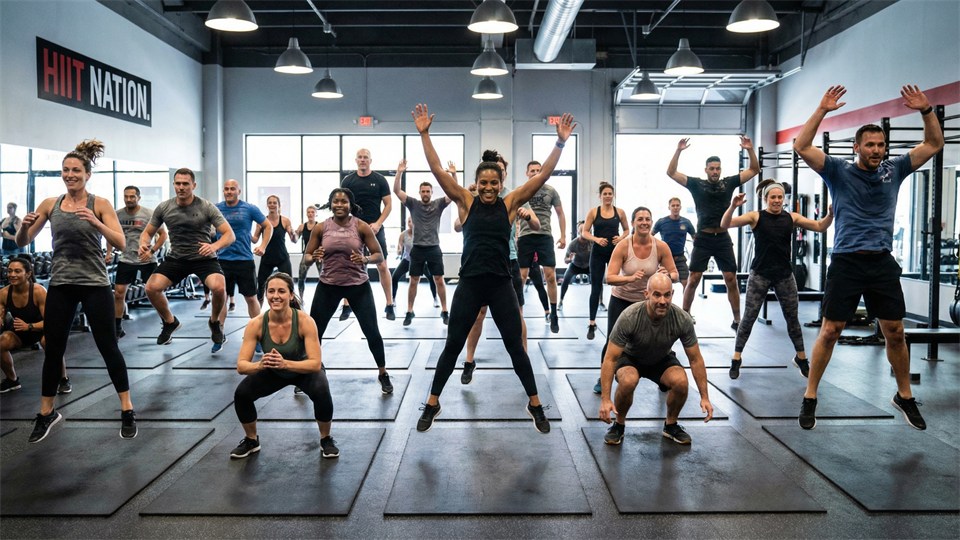
To get the most out of HIIT, you should plan your training thoroughly. Here are some steps:
A simple HIIT program for beginners could be: 30 seconds jumping jacks, 30 seconds rest, 30 seconds squat, 30 seconds rest, 30 seconds plank, 30 seconds rest – repeat 3-4 times.
HIIT is for almost everyone – regardless of age and experience. The exercises and intensity can be adjusted so that both beginners and advanced can benefit. However, it is important to listen to your body and take into account any injuries or illnesses. For people with heart problems, high blood pressure, or other health challenges, HIIT should only be performed after consulting a doctor.
If you have never tried HIIT before, start gently. Use more and longer breaks, choose simple exercises that do not strain the joints too much, and pay attention to how your body reacts. The most important thing is that you perform the exercises correctly to avoid overuse and injuries.
If you are used to training, you can challenge yourself with more rounds, shorter breaks, or more complex exercises. Some combine HIIT with weights or training equipment for extra effect.
HIIT has a number of well-documented health benefits, but it is not without risks. Here’s an overview:
Therefore, always remember to warm up thoroughly, listen to your body, and take breaks if you feel pain or discomfort.
For most people, 2-3 times a week is sufficient. HIIT is so demanding that the body should have time to recover between sessions. You can advantageously combine HIIT with other forms of exercise, such as yoga, strength training, or walking.
No, many HIIT programs can be done at home or outdoors without equipment. If you want more variety, you can include kettlebells, weights, or resistance bands.
Yes, HIIT can be particularly effective for weight loss because you burn a lot of calories in a short time and increase the body's afterburn. At the same time, muscle mass is maintained or built, which also benefits metabolism.
Start by finding a HIIT program that matches your level and goals. You can find plenty of free programs online, or put together your own with your favorite exercises. Set realistic goals, and make sure to stick with the training – it’s the consistency that brings results.
Feel free to use a timer or HIIT app so you can easily keep track of intervals and breaks. Train together with others – it increases both motivation and fun.
HIIT is an effective, flexible, and time-saving form of exercise that suits most people. By alternating between short, intense periods and breaks, you get the most out of your training – for fitness, strength, and fat burning. Whether you are a beginner or advanced, you can adapt HIIT to your needs. Remember to start gently, listen to your body, and make it a fun part of your everyday life.