



There are many ways to improve your fitness and health, but two of the most popular forms of exercise are HIIT and aerobic training. Both have documented benefits, but they differ significantly in structure, intensity, and effect on the body. In this article, we review what HIIT and aerobic training each entail, how they affect the body, and which target groups they are best suited for. Finally, you’ll get concrete advice on how to choose the right form of exercise for you.

HIIT stands for High Intensity Interval Training. It is a form of exercise where you alternate between short periods of maximal or near-maximal effort and periods of lower intensity or rest. A typical HIIT session lasts 10-30 minutes and can include exercises such as sprints, burpees, cycling, or jumps. The aim is to push the body close to its maximum performance in short intervals, providing an effective and time-saving workout.
A simple HIIT program might look like this:
The entire workout can be done in under 20 minutes, but your heart rate rises quickly, and you’ll work up a sweat.
Aerobic training is also known as endurance training or cardiovascular training. Here, you work at low to moderate intensity over a longer period, typically 30-60 minutes or more. Examples include running, cycling, swimming, or rowing at a steady pace. The word "aerobic" means "with oxygen," referring to the body using oxygen to burn energy and keep going over time.
A classic aerobic training session could be:
The aim is to build endurance, strengthen the heart and lungs, and burn calories over time.
Both HIIT and aerobic training strengthen the heart, increase oxygen uptake, and improve your fitness, but they do so in different ways. With HIIT, you work at a high heart rate and activate both the aerobic and anaerobic energy systems. This means the body quickly uses its energy stores, and you burn many calories in a short time. Aerobic training takes place at a pace where the body mainly uses fat and oxygen as fuel, and the strain on muscles and the cardiovascular system is more even.
HIIT quickly raises your heart rate, and the body produces lactic acid, which gives the familiar burning sensation in the muscles. After training, the body uses extra energy to recover (the so-called "afterburn"), meaning you continue to burn calories for hours after exercise.
With aerobic training, the body works for a longer time at lower intensity, and less lactic acid is produced. Here, recovery time is shorter, and the risk of overuse injuries is often lower, especially for beginners or people with injuries.
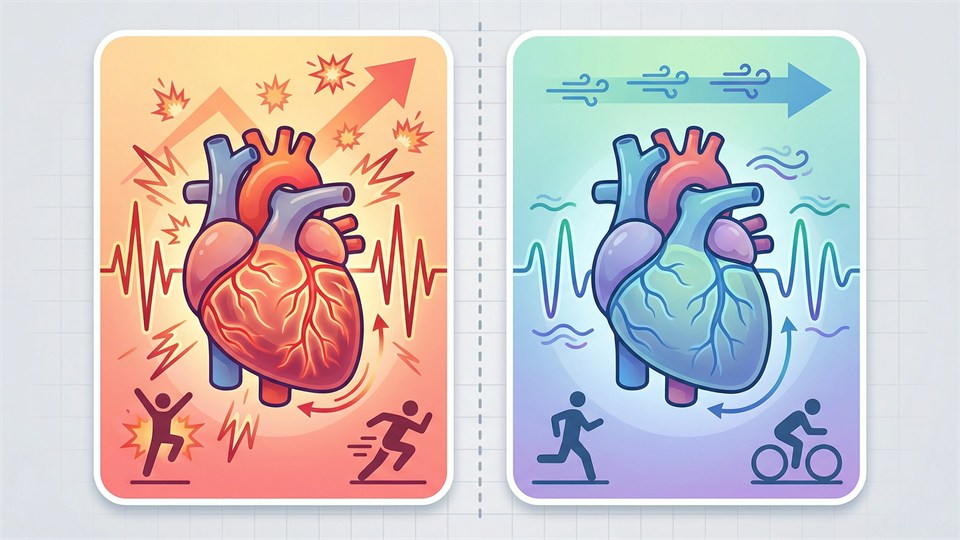
The choice between HIIT and aerobic training depends on your goals, your current fitness, and any health challenges. Here are some guidelines:
The best choice is often to combine the forms of exercise. For example, a week can consist of 2 HIIT sessions and 2-3 longer, easy training sessions.
Both HIIT and aerobic training have documented positive effects on physical and mental health:
For people with chronic diseases (e.g. diabetes, COPD, or high blood pressure), it may be necessary to adjust the intensity and choose the most gentle form of exercise. Always talk to your doctor if you are in doubt.
It is a common misconception that HIIT is only for young and very fit people. With the right adjustments, most people can benefit from interval training – it’s about adjusting the load. Conversely, many believe that aerobic training does not give results if you want to lose weight. In fact, long-term, moderate exercise is a solid foundation for weight loss and health.
Another mistake is starting out too hard – especially with HIIT. Progressing too quickly increases the risk of injury and can lead to loss of motivation. Always start by adjusting the intensity to your level.
The most important thing is to choose a form of exercise you can stick with. Try out different activities and notice how your body responds. Always start with a thorough warm-up, especially with HIIT, and finish with stretching. Set realistic goals, and remember that even small progress counts. Many experience increased energy, better sleep, and more surplus in everyday life after just a few weeks of regular exercise.
Both HIIT and aerobic training have their strengths and can contribute to a healthier life. Your choice depends on your personal goals, training experience, and health. Often, a combination of both forms of exercise gives the best results. Most important is that you find a training routine you enjoy – that way it’s easier to stick with it and benefit from the many health advantages.