

Minerals play a crucial role in our health, but many people do not know exactly what they are or why they are so important. In this article, you will get a thorough overview of what minerals are, how they work in the body, and which foods are good sources of the various minerals.
Minerals are inorganic substances that the body needs in small amounts to function optimally. They differ from vitamins because they cannot be broken down or produced by living organisms. Instead, minerals must be supplied through the diet or, in some cases, via supplements. Minerals are found naturally in the soil and are absorbed by plants – and thus also by the animals we eat. When we consume food or drink, we pass these minerals on to our own bodies.
The body cannot produce minerals itself, which makes it especially important to get them through a varied diet. Minerals are necessary for many biological processes, such as building bones and teeth, nerve and muscle function, hormone production, and maintaining fluid balance.
Minerals work both individually and together with other nutrients. Most minerals function as building blocks or as helpers (catalysts) for a wide range of processes. Some minerals are directly part of the body's structure, while others are necessary for enzymes and hormones to perform their tasks.
Examples of important functions include:
Minerals are divided into two main groups: macrominerals and microminerals (trace elements). The division depends on how much the body needs.
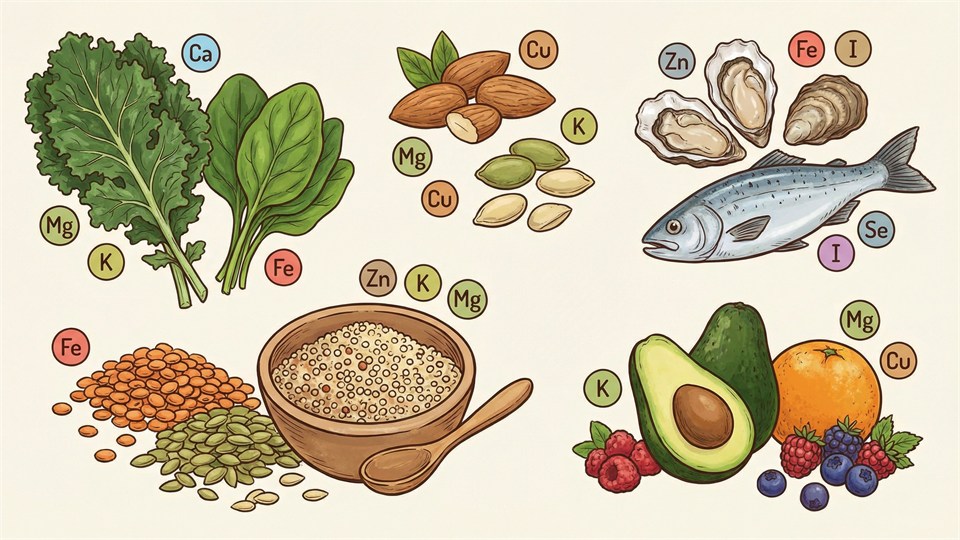
Macrominerals are the minerals the body needs in relatively large amounts (over 100 mg daily). The most important macrominerals are:
Microminerals or trace elements are minerals that the body only needs in very small amounts (a few mg or micrograms daily). The most well-known are:
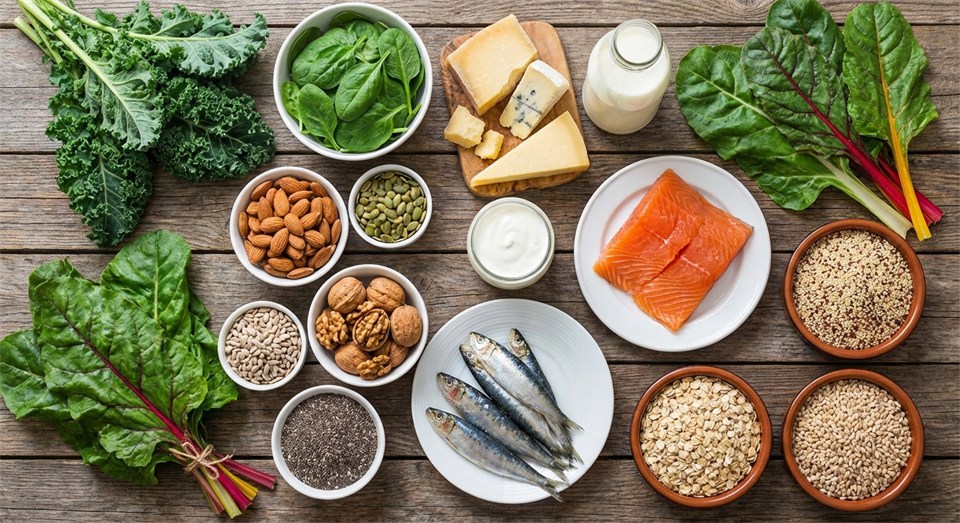
Minerals are found in many different foods. A varied diet with fruit, vegetables, whole grains, meat, fish, dairy products, nuts, and seeds usually covers the needs for most people. However, some minerals are found in particularly high concentrations in certain foods:
The absorption of minerals in the body can be affected by other substances in food. For example, fiber, phytates, and certain polyphenols inhibit the absorption of iron and zinc, while vitamin C increases the absorption of iron from plants.
Both deficiency and overdose of minerals can have serious consequences for health. Deficiencies most often occur if the diet is monotonous or if the body has an increased need, for example during pregnancy or with certain diseases. Overdose rarely occurs through a normal diet, but can happen if you take large doses of supplements.
It is therefore important to stick to the recommended daily intakes and only take supplements as needed or on your doctor's advice.
Most people can meet their mineral needs through a varied diet. However, supplements may be necessary for special groups, such as pregnant women, breastfeeding women, the elderly, vegans, or people with diseases that inhibit the absorption of nutrients. If you are considering taking supplements, you should always talk to your doctor or a nutrition expert to avoid overdose or unfavorable combinations.

Minerals are often absorbed and function in interaction with other nutrients. For example, vitamin D is necessary for the body to absorb calcium effectively. Likewise, too much of one mineral can inhibit the absorption of another – for example, too much calcium can inhibit the absorption of iron and zinc. Therefore, it is important to have balance and variety in the diet so the body gets the right amounts of all necessary substances.
Minerals are vital, even though we only need them in small amounts. They are fundamental for everything from strong bones to a well-functioning nervous system. By eating a varied and balanced diet, most people can meet their needs and thus support the body's health in the long term. Remember, neither deficiency nor overdose is beneficial – balance is the key when it comes to minerals.