

When talking about modern football, you often hear terms like "number 6" and "number 8" mentioned in relation to the midfield. But what do these positions actually mean? Why are they so important for a team's success, and how do they differ from each other? This article gives you a thorough overview of both the 6 and 8 positions in football, so you get a clear understanding of their roles, tasks, and significance.
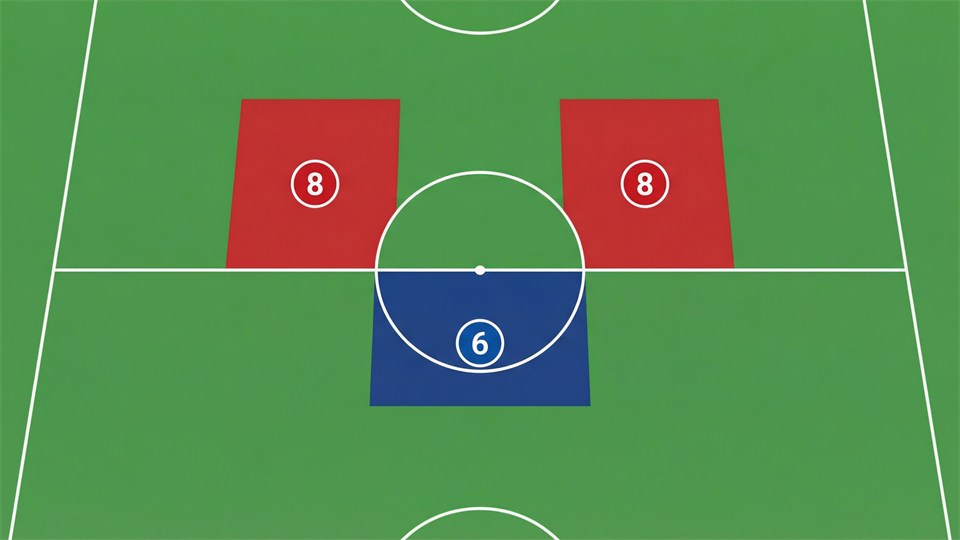
The midfield is often described as the "heart" of a football team. This is where the play both starts and is directed. Midfielders connect the defense with the attack and typically have the most touches of the ball during a match. Especially in modern football, the midfield has become even more complex, with roles divided into different specialized positions – including the 6 and 8.
The 6 position, often called "the defensive midfielder," is placed in front of the defense. The number 6 is responsible for protecting the defense and breaking up the opponent's attacks. You can see the 6 as a kind of shield in front of the defense. In classic 4-3-3 or 4-2-3-1 formations, the 6 sits centrally and a bit deeper than the other midfielders.
Examples of well-known number 6s are Sergio Busquets (Barcelona), Casemiro (Manchester United, formerly Real Madrid), and Claude Makélélé (Chelsea, Real Madrid). These players are masters at breaking up opponents' attacks and building play from a deep position.
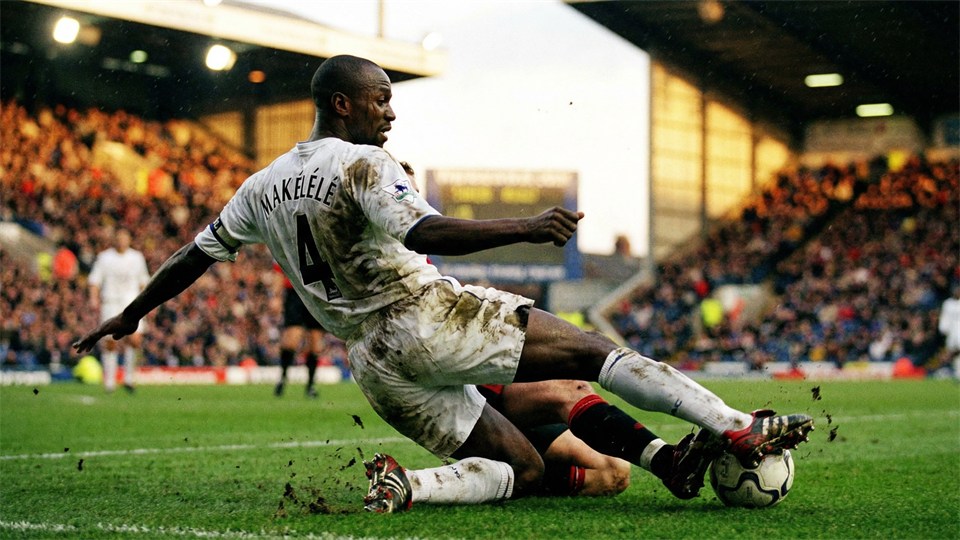
The 8 position is often called "the central midfielder" or "box-to-box midfielder" in English. The number 8 moves between both penalty areas and participates in both build-up play and defensive work. The 8 is known for versatility and great stamina.
Examples of famous number 8s are Kevin De Bruyne (Manchester City), Luka Modrić (Real Madrid), and Steven Gerrard (Liverpool). These players can both distribute play, shoot from distance, and contribute defensively when required.

The main difference between the 6 and the 8 lies in their primary focus and areas of work on the pitch:
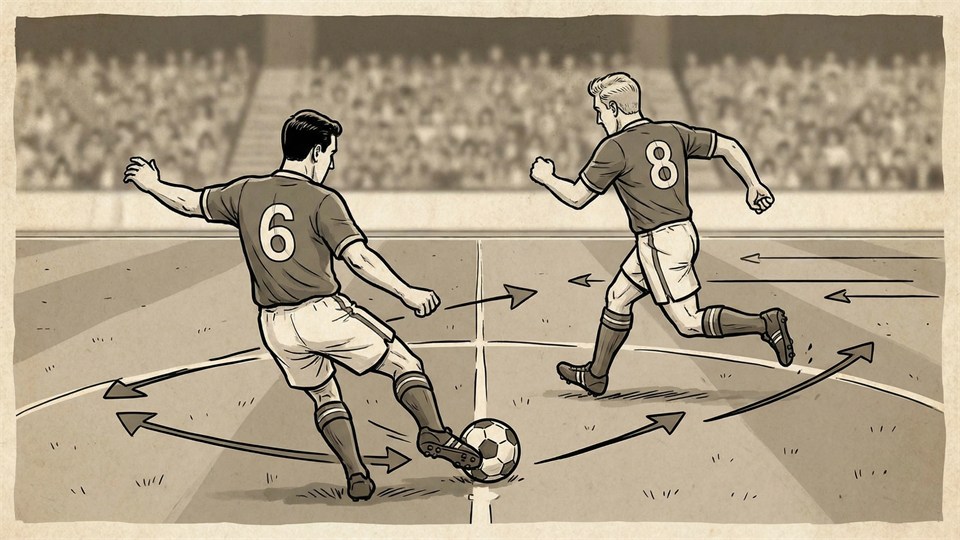
You could say that the 6 is more stationary and positional, while the 8 is dynamic and constantly moving between the two boxes.
The 6 position can vary depending on the team's formation and style of play. Here are a few examples:
Depending on the opponent and the development of the match, the 6 can sometimes push further forward or drop deeper to help the defense.
The 8 position is incredibly demanding because the player must be able to adapt to both attacking and defensive situations. The 8 must be good at reading the game, choosing the right moment to join the attack, and knowing when it's time to drop back and help the defense. Many 8s are therefore also skilled leaders on the pitch and important for the team's balance.
A typical action for an 8 might be to receive the ball at speed, play a quick pass to a striker, or move into a shooting position if the opportunity arises. At the same time, it's expected that the 8 immediately works back if the ball is lost.

A good example of a 6 is Sergio Busquets from FC Barcelona. He is known for his ability to read the game, break up opponents' attacks, and distribute the ball safely to more attacking teammates. On the other hand, Kevin De Bruyne from Manchester City is a classic example of an 8 – he is both goal dangerous, creative, and works intensively at both ends of the pitch.
Often, a team will need both a strong 6 and one or two skilled 8s to maintain balance in midfield. Without a good 6, you risk being overrun, while a weak 8 can mean the team lacks dynamism and creativity in attack.
To become a skilled 6 or 8 requires both technical training, tactical understanding, and physical capacity. 6s should focus on positioning, tackling, and passing under pressure, while 8s need to work on their running capacity, ball control, and the ability to quickly switch between defense and attack.
Many coaches use small-sided games and drills where you have to react quickly to the development of play, win the ball, and play it on – just like the situations that especially 6s and 8s face in matches.
The 6 and 8 positions form the backbone of many football teams. A strong 6 protects the defense and creates security at the back, while the 8 links the team's lines together and adds energy, creativity, and balance. Understanding these roles is important – not just for players and coaches, but also for fans who want to analyze and understand why some teams dominate in midfield.
Next time you watch a football match, try to notice how the 6 and 8 work together and influence the rhythm of the game. Often, it is precisely these players who – even though they don't always score the most goals – are crucial to the team's success.