

Antioxidants is a term that is often mentioned in connection with health, diet, and disease prevention. But what does it actually mean, and why are they important for our bodies? In this article, you’ll get an easy-to-understand overview of what antioxidants are, how they work, and why they play a central role in protecting our cells from damage.
Antioxidants are molecules that can prevent or limit damage caused by so-called free radicals. Free radicals are unstable molecules that are naturally formed in the body during normal processes such as breathing, energy production, and immune defense. However, they can also arise from external influences, for example from smoking, pollution, the sun’s UV rays, or an unhealthy diet.
Free radicals can damage the body’s cells, proteins, and DNA, which increases the risk of diseases such as cancer, cardiovascular diseases, and signs of aging. The role of antioxidants is to neutralize these free radicals so they do not cause damage.
There are many different antioxidants. Some of the most well-known are:
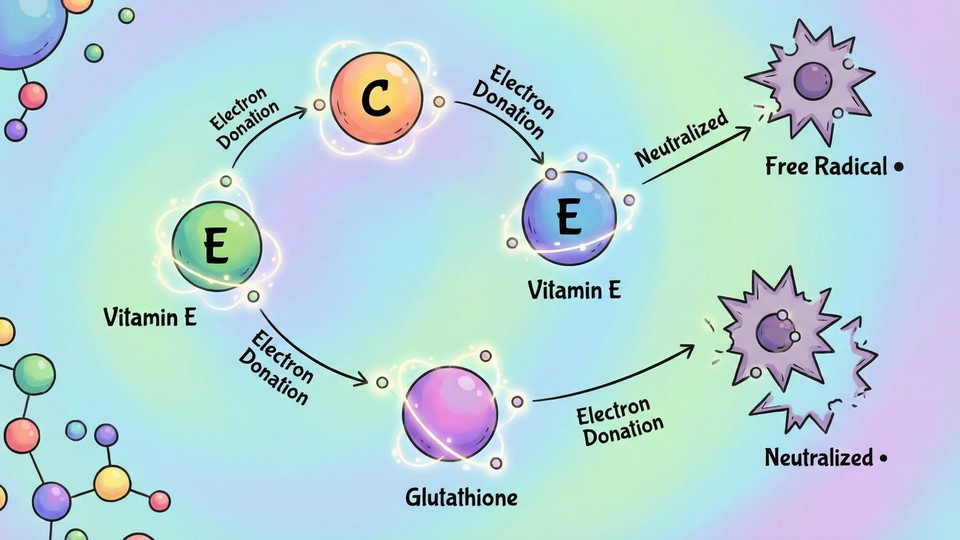
Free radicals lack an electron and therefore try to "steal" electrons from other molecules, which can lead to chain reactions of cell damage. Antioxidants work by donating an electron to the free radical without themselves becoming unstable. In this way, the chain reaction is broken, and the cells are protected from damage.
The body produces some antioxidants itself, such as the enzyme superoxide dismutase, but most are obtained through the diet. The balance between free radicals and antioxidants is crucial. If there are too few antioxidants compared to the amount of free radicals, what is called oxidative stress occurs.
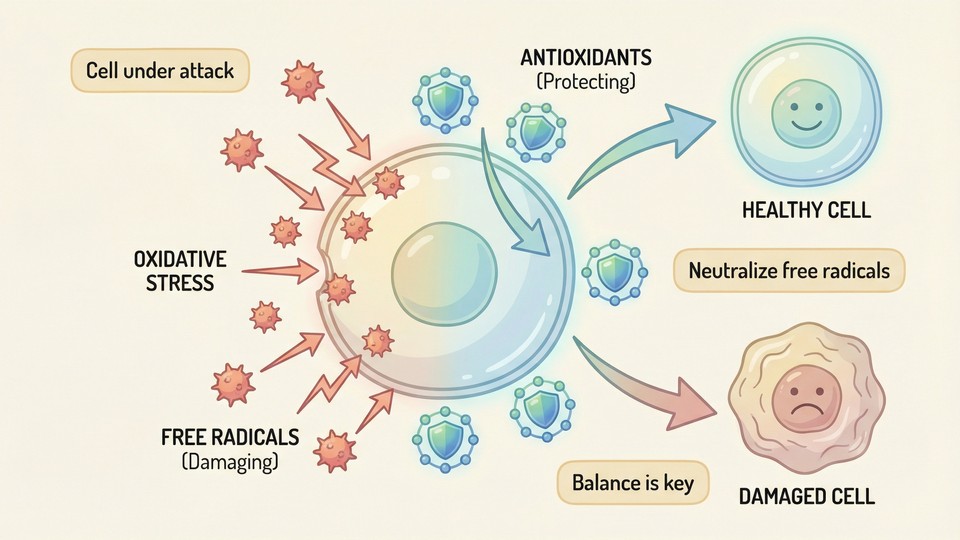
Oxidative stress is a situation where the body’s defense with antioxidants is not sufficient to counteract the harmful effects of free radicals. This can lead to cell damage, inflammation, and over time increase the risk of chronic diseases such as:
It is therefore important to have a good balance between the production of free radicals and the intake of antioxidants.
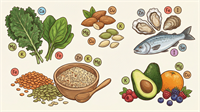
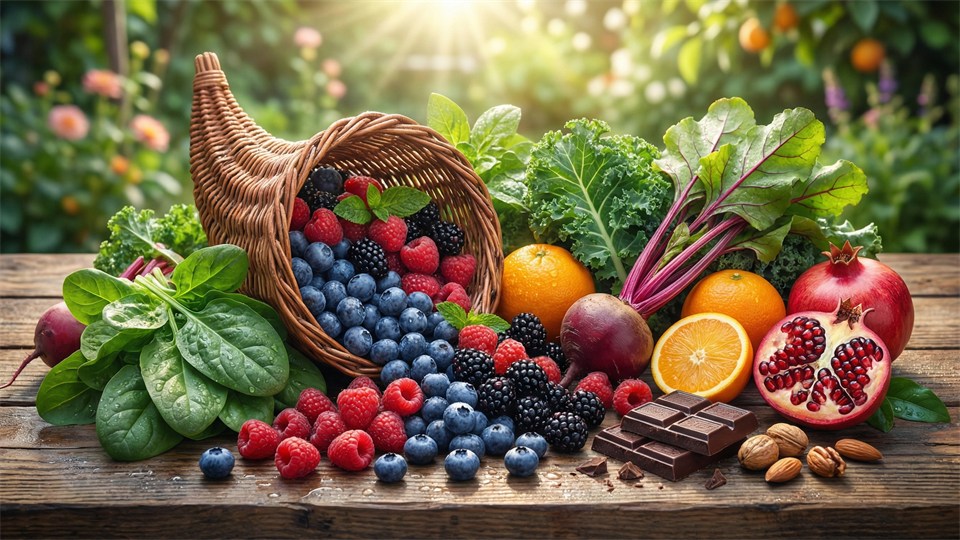
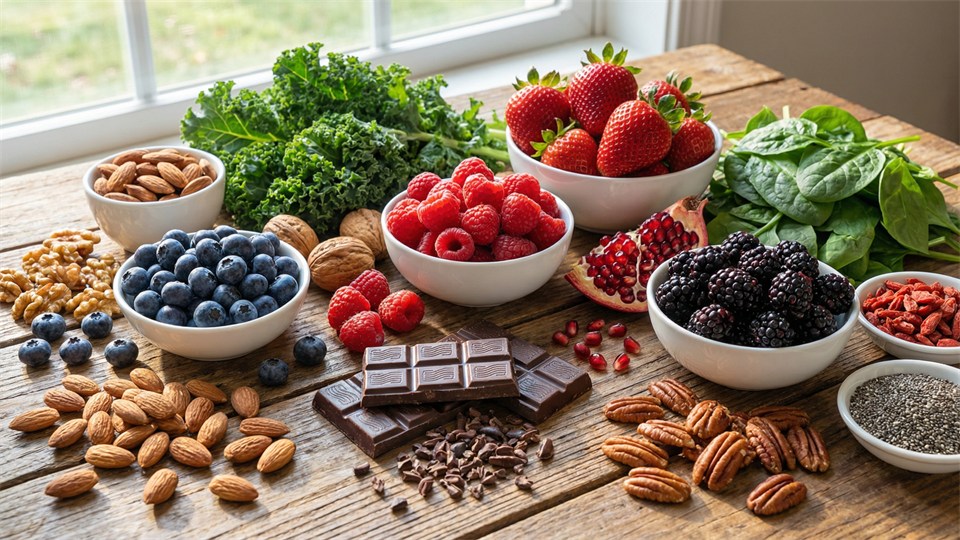
Antioxidants are found in many foods – especially in fruits, vegetables, berries, nuts, seeds, spices, and certain beverages such as tea, coffee, and cocoa. A varied and colorful diet is therefore a good way to ensure that you get enough antioxidants.
It is worth noting that different antioxidants work best together. Therefore, it is beneficial to eat many different types of foods rather than focusing on just one particular type.
There are a wealth of antioxidant supplements on the market. But several studies suggest that it is best to get antioxidants through the diet and not through supplements, unless there are specific medical reasons for it. In high doses, certain antioxidants can actually be harmful and in some cases increase the risk of disease.
The body is designed to absorb antioxidants from natural sources, where they often occur together with other beneficial substances that enhance the effect. Therefore, it is recommended to eat a varied and colorful diet rather than taking large amounts of supplements.
Some people may need supplements, for example in cases of documented deficiency of vitamin C, E, or selenium. This may also apply to people with certain diseases, those on very restrictive diets, or elderly people with reduced appetite. In these cases, you should always consult a health professional.
It can be tempting to think that the more antioxidants you get, the better. But the body has a natural need for balance. Too many antioxidants can actually interfere with the body’s own ability to fight infections and in rare cases increase the risk of certain diseases.
Instead of focusing on large amounts of individual substances, you should aim for a varied diet with many different antioxidants. It is the interaction in the diet that provides the best protection.
One of the most widespread claims about antioxidants is that they can slow down the body’s aging. It is true that oxidative stress helps accelerate aging processes in the body and on the skin. By limiting this process, antioxidants can help keep cells healthy longer and reduce visible signs of aging such as wrinkles and pigmentation changes.
However, this does not mean that antioxidants can stop aging completely – but they can help with a healthier aging process and perhaps reduce the risk of age-related diseases.
Small changes can make a big difference if you want to increase your intake of antioxidants.
Antioxidants are important protectors for your cells. They help neutralize free radicals and reduce the risk of several diseases. The best way to get antioxidants is through a varied and colorful diet with plenty of fruits, vegetables, nuts, and whole grains. Supplements are rarely necessary for healthy people. A balanced approach to antioxidants can contribute to both health and well-being – throughout life.