

Every day we feel the wind in our hair, see the trees bend, and hear the air rushing. But what is wind, really? And where does it come from? The answer lies in another concept: air pressure. Air pressure and wind are two fundamental phenomena in Earth's atmosphere that affect everything from weather to climate and our daily lives. In this article, you will learn how air pressure arises, how it makes the air move, and why wind can be anything from a gentle breeze to a violent storm.
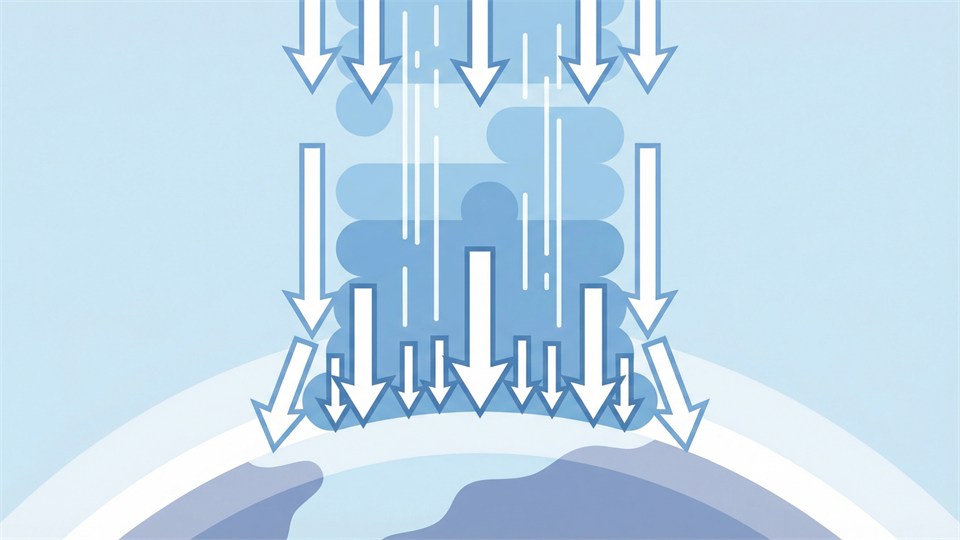
Air pressure is the pressure that the air in the atmosphere exerts on everything it surrounds. Air consists of billions of tiny air molecules that move around and bump into each other and into surfaces. When many molecules hit a surface, a pressure arises – namely, air pressure. The more molecules there are, and the faster they move, the higher the pressure becomes.
At sea level, the average air pressure is about 1013 hPa (hectopascal), but it varies greatly from place to place and from day to day. When you move up into the mountains, the air becomes thinner, and the air pressure drops because there are fewer molecules above you.
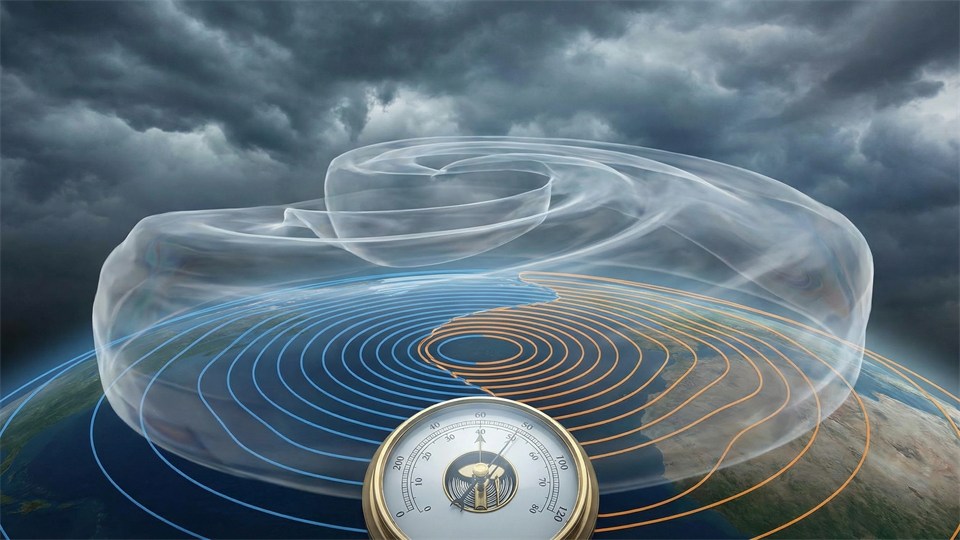
Air pressure is measured with an instrument called a barometer. Barometers come in many forms, but the most common show the pressure in hectopascals (hPa) or millibars (mbar). When meteorologists talk about high pressure and low pressure, it is about areas where the air pressure is higher or lower than the surroundings. These pressure differences are crucial for the weather and the movement of the wind.
Air pressure arises because the Sun heats the Earth unevenly. The Sun's rays hit the equator more directly than the poles, and therefore the area around the equator becomes warmer. Warm air expands and becomes lighter, while cold air contracts and becomes heavier. This means that the air pressure is lower where the air is warm, and higher where it is cold.
Imagine you have a pot of boiling water. The steam rises because it is warmer and lighter than the surrounding air. In the same way, warm air rises in the atmosphere, creating an area of low pressure. Cold air sinks, creating high pressure. These differences form the basis for wind.
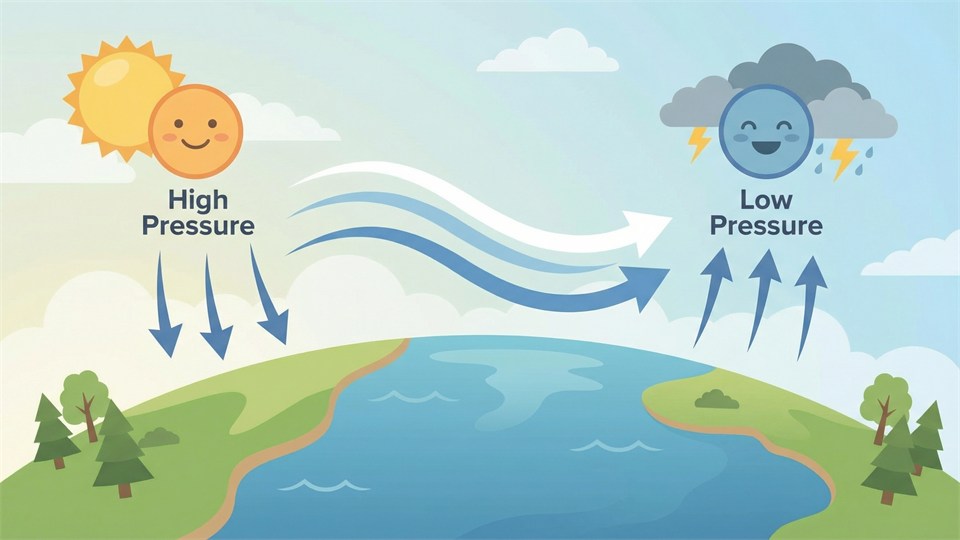
Wind is air that moves from an area of high air pressure to an area of low air pressure. The movement happens because nature always tries to even out differences: If there is too much air (high pressure) in one place, some of the air will move to a place with less air (low pressure). It is this movement that we feel as wind.
The greater the difference in air pressure between two areas, the stronger the wind becomes. If the pressure difference is small, we may only feel a gentle breeze. If the difference is large, it can cause a storm or hurricane.
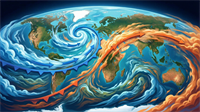
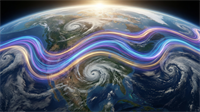
On a global scale, air pressure and temperature differences create large wind systems. These systems help transport heat from the equator toward the poles and cold from the poles toward the equator. The most important global winds are:
These wind systems are also affected by Earth's rotation (the Coriolis effect), which causes winds to bend to the right in the northern hemisphere and to the left in the southern. This means that winds rarely blow directly from high pressure to low pressure, but often follow curved paths.
If the Earth did not rotate, the wind would simply blow directly from high pressure to low pressure. But because the Earth spins, the winds are deflected, so they get a spiral movement. That is why large weather systems like lows and highs rotate counterclockwise (in the northern hemisphere) or clockwise (in the southern).
In addition to the large, global wind systems, there are also local winds that arise due to smaller differences in temperature and air pressure. Here are a few examples:
Wind is very important for both nature and human life. Here are some examples:
Meteorologists use measurements of air pressure, temperature, and humidity to make weather maps. On these maps, you can see areas of high and low pressure and predict where the wind will move. Modern weather models also use satellites and computers to predict the wind's strength and direction several days ahead.
Example: If a low pressure area is approaching, meteorologists will warn of strong winds because the air flows in toward the low pressure. Conversely, stable high pressure often brings light winds and clear weather.
Air pressure and wind are closely connected phenomena that shape Earth's weather and climate. They arise because of the sun's heating, temperature differences, and Earth's rotation. Whether you feel a gentle breeze or experience a storm, it is air pressure and wind at play. Understanding these forces helps us predict the weather and harness wind energy in our daily lives.