



Darts is today a global sport with millions of players and fans around the world. But the history of darts is much more than just a pub game – it is a story of innovation, tradition, and the sport's ability to bring people together across cultures and borders. In this article, we dive into the fascinating development of darts: from medieval England to modern, professional tournaments with large prize money and worldwide TV coverage.
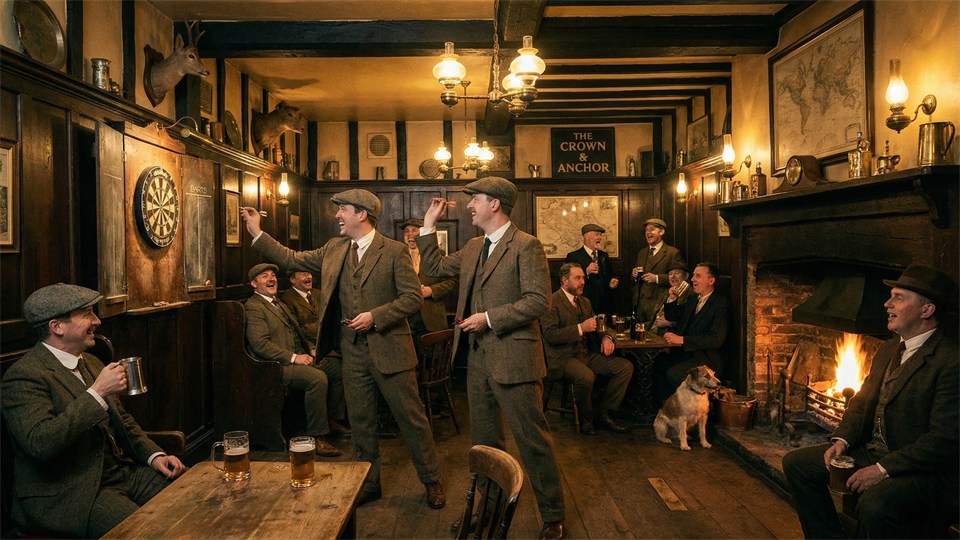
The roots of darts can be traced all the way back to the Middle Ages, when soldiers used short arrows or spearheads as training weapons. They threw them at tree stumps or wine barrels, trying to hit specific rings in the wood to train precision. This simple pastime quickly spread among soldiers and civilians, and eventually became popular in inns and pubs in England. Here, darts became a social activity, where people competed for honor – and often also for a round of beer.
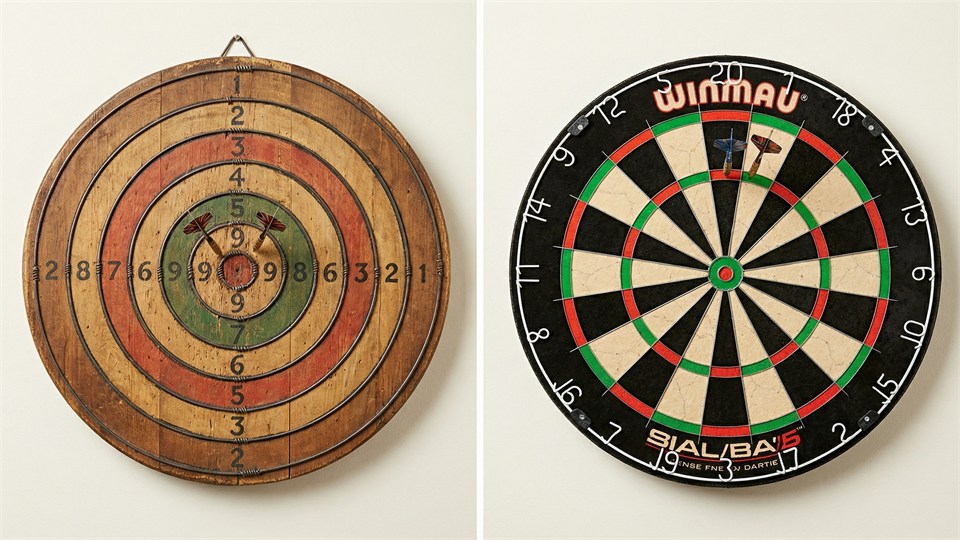
The first dartboards were typically made of wood, where the growth rings formed natural circles on the board. This became the basis for the modern dartboard's division into sections and scoring areas. The darts themselves were made of wood, often with a metal tip and feathers at the back to stabilize the flight. The game quickly became a staple of English inn and pub culture, but it would be many years before darts was recognized as a real sport.
In 1896, the English carpenter Brian Gamlin invented the classic 20-section dartboard design that we know today. He placed the numbers in a specific order to punish inaccurate throws and make the game more challenging. This arrangement ensures that high and low scoring areas are close to each other, so a small mistake can be costly.
Originally, dartboards were made from elm wood, but as the boards quickly wore out from the many darts, from the 1930s people began to use sisal, which is made from tough plant fibers. Sisal dartboards are self-healing – the holes close up when the darts are pulled out – and are still used today in official competitions.
Although darts was long associated with the pub environment, from the beginning of the 1900s the game was organized into clubs and local leagues. In 1924, the first official organization, the National Darts Association, was founded in England. Several national and international federations followed, and in 1973 the British Darts Organisation (BDO) was formed, which for many years hosted the biggest tournaments.
The rules of darts were gradually standardized, including the distance from the board to the throwing line (2.37 meters), the height of the board (1.73 meters to the center), and the maximum weight of the dart (often 18-26 grams). These standardizations meant that players could compete on equal terms – no matter where they played.
Throughout the 1980s and 1990s, interest in darts grew explosively, especially in the United Kingdom and the Netherlands. TV tournaments such as "World Darts Championship" and "Premier League Darts" became major viewer magnets, and dart players achieved star status. In 1992, a group of professional players broke away from the BDO and formed the Professional Darts Corporation (PDC), which quickly became the leading organization for elite players.
With the arrival of the PDC, prize money and professional conditions improved significantly. Today, the world's best players can make a living from the sport, and the biggest tournaments are broadcast globally to millions of fans. Darts has evolved from a pub game to a modern TV sport, where the drama and intensity can match any other sport.

Darts is often associated with the United Kingdom, but the sport has long since gained a global foothold. Especially in the Netherlands, Germany, Australia, and several Asian countries, darts has become popular both as a competitive and leisure sport. International tournaments have participants from all over the world, and several players from non-English-speaking countries have won major championships.
The sport's popularity is partly due to the fact that darts is easy to get started with, requires minimal space and equipment, and can be played by people of all ages. Many start by playing darts at home or at the local bar, but today the opportunities to play in clubs or tournaments are widespread throughout the world.
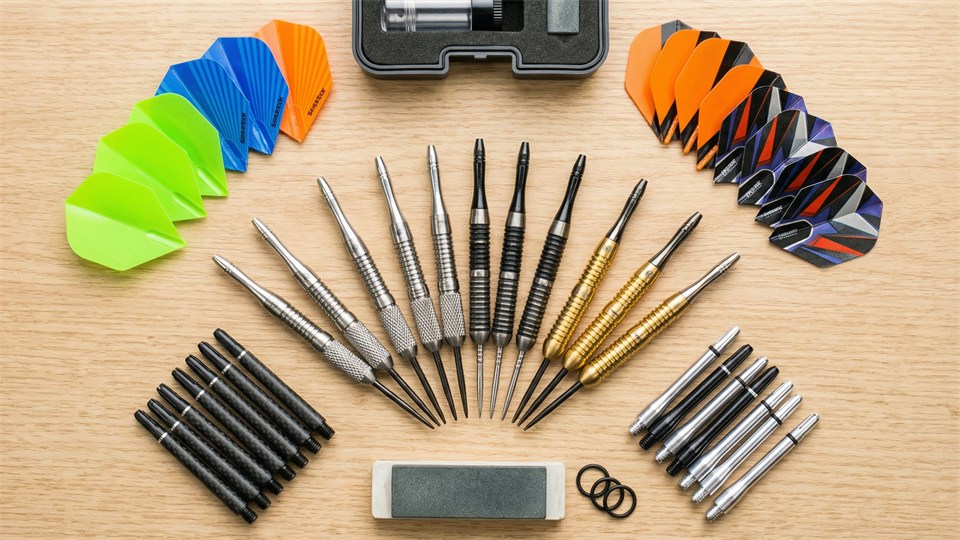
Darts have undergone significant development. From simple wooden darts, today's darts are often made of tungsten, which makes them slim and heavy – an advantage for precision and tighter groupings on the board. Flights (the wings at the back of the dart) and shafts (the dart shaft) come in countless varieties, so the player can adapt the dart to their style and technique.
Electronic darts have also gained ground, especially in Asia and Germany. Here, the board automatically registers points, and many machines offer digital games and statistics. This has made darts even more accessible and social.
Darts has over time produced several major profiles. Players such as Phil Taylor ("The Power"), Michael van Gerwen, and Raymond van Barneveld are known for their incredible precision and ability to deliver under pressure. Phil Taylor has won the world championship a total of 16 times, making him a legend in the sport.
Iconic moments, such as perfect "9 dart finishes" (finishing a leg with just 9 darts) are often broadcast live and create great excitement among fans. These moments have helped elevate the status of darts as a sport and inspire new generations of players.
The development of darts does not seem to be slowing down anytime soon. New technologies, bigger tournaments, and increased globalization mean that even more people are discovering the sport. International federations are working purposefully to have darts recognized as an Olympic sport, and more countries are investing in talent development and club environments.
Whether you play for fun at home in the living room, or dream of standing on the big stage, darts is a sport with room for everyone – and a fascinating history that is still being written.
The journey of darts from medieval tree stumps to modern TV-broadcast championships shows how much a sport can develop through time, technology, and community. Darts is more than a game – it is a culture, a competition, and a global passion that brings people together across age and background.